Catholic News
Pope Leo XIV told young people at a Buenos Aires vigil not to lose hope and not to be afraid to answer Christ's call. On Wednesday he celebrates Mass at Luján, then flies to Peru.
The Holy Father has celebrated Mass in multiple cities, met with Catholic leadership and visited with several communities in Argentina.
Pope Leo XIV marked two full days in Argentina with several Masses and meetings with Catholic leadership along with a youth vigil and a celebration of vespers.
The pope will finish his Argentinian visit on Nov. 11 and fly to Peru, his adopted country where he spent years as a bishop and where he will finish out his historic South American trip. The Holy Father already visited Uruguay at the outset of his journey.
Here are some photos of Pope Leo's activities in Argentina.
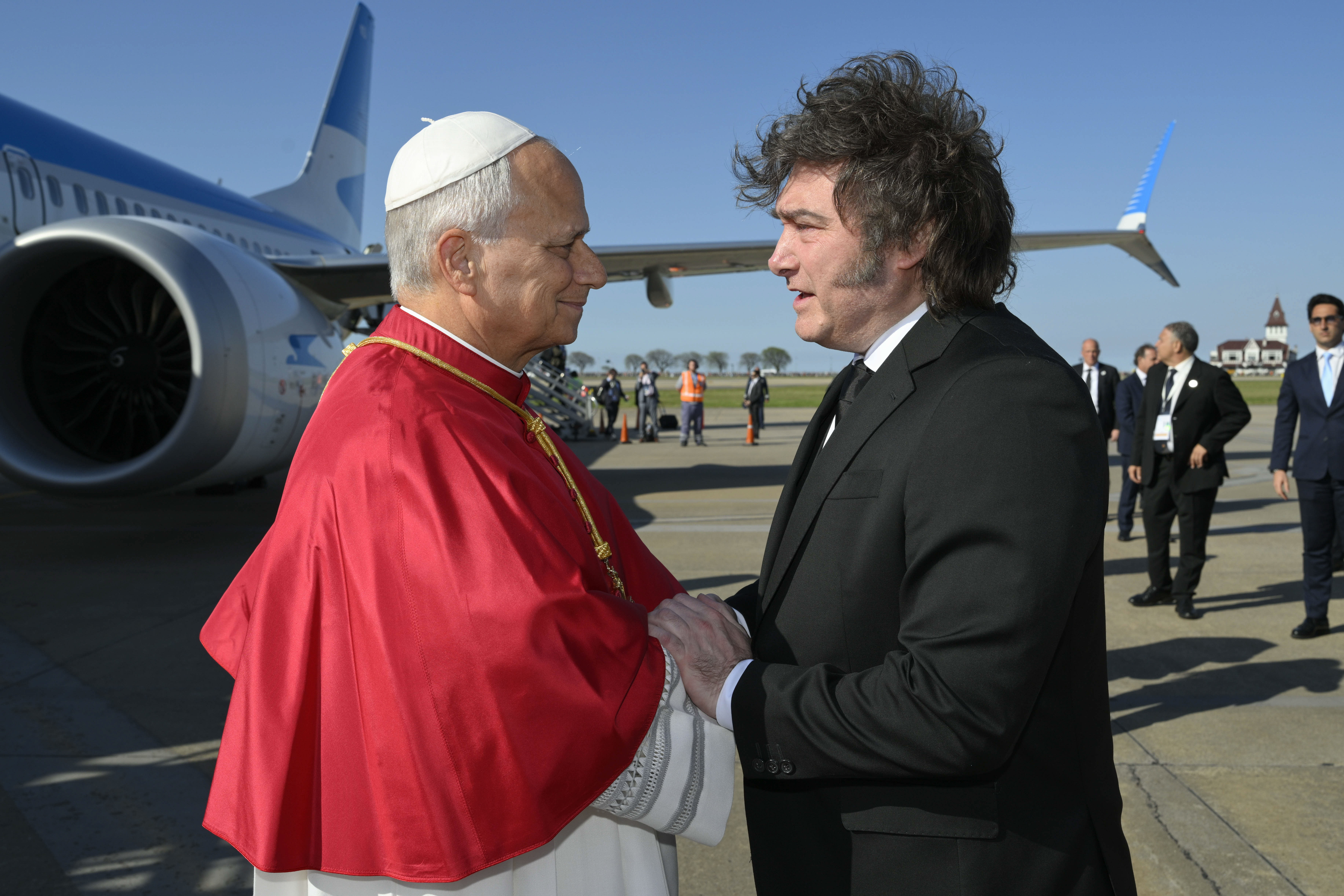
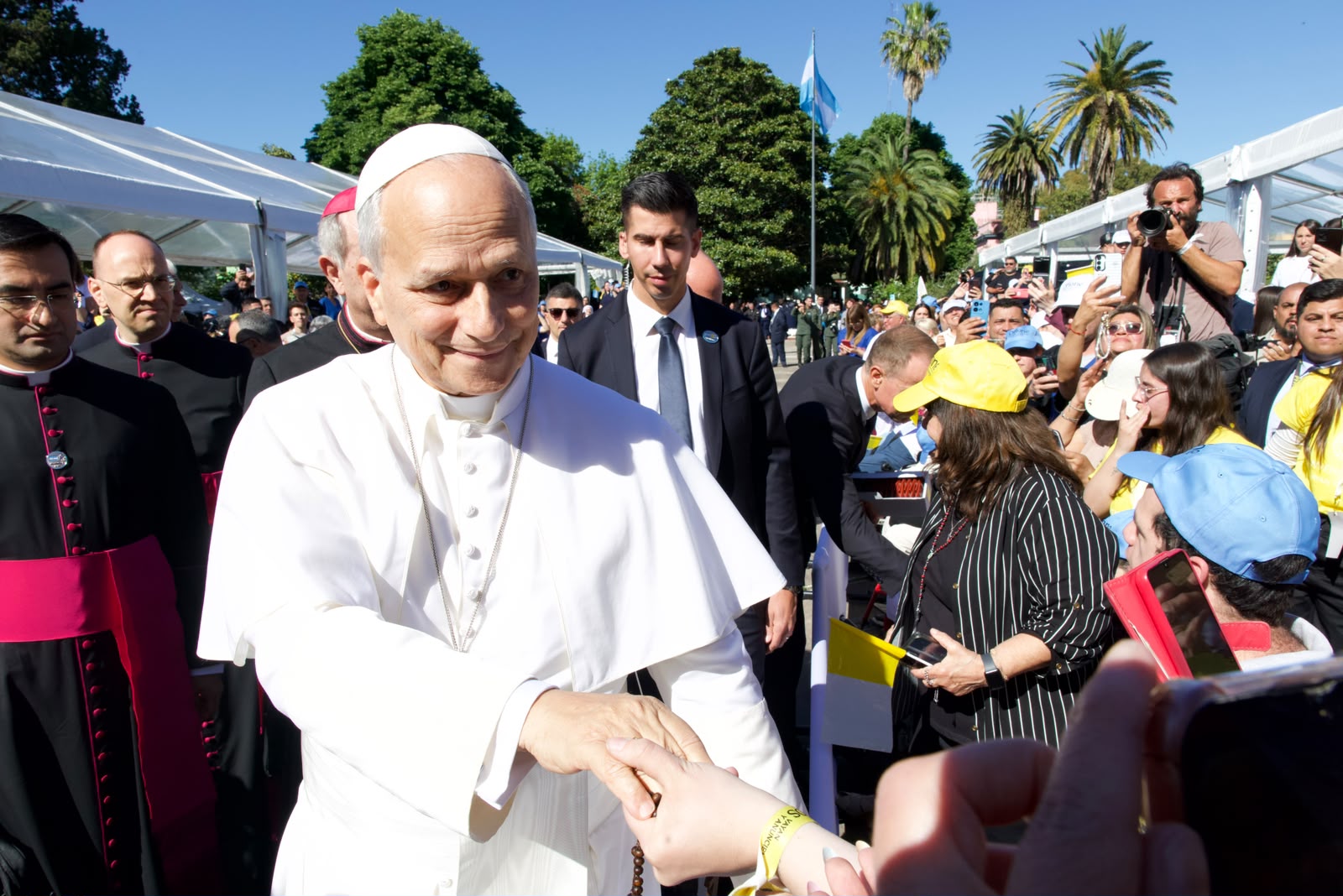
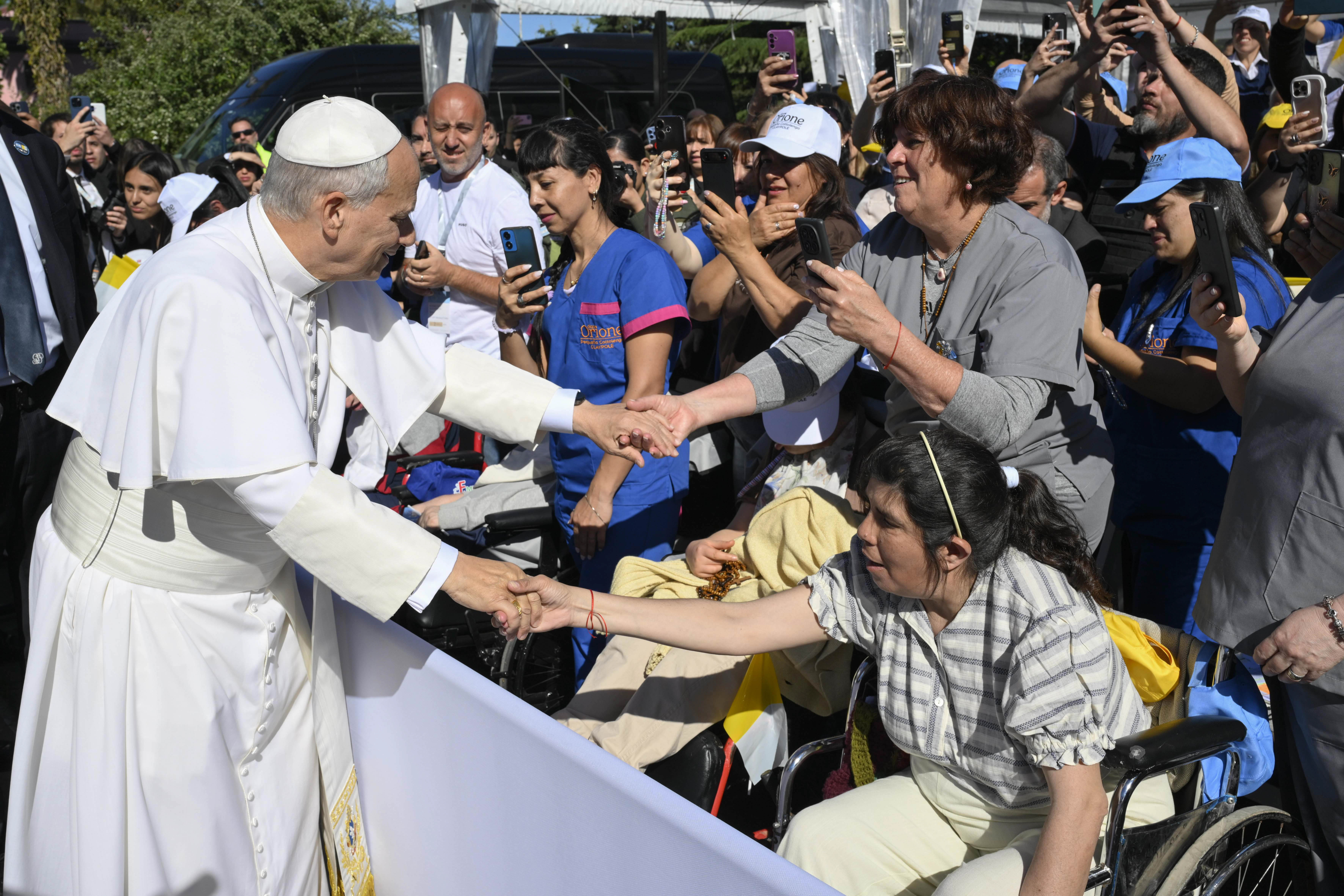
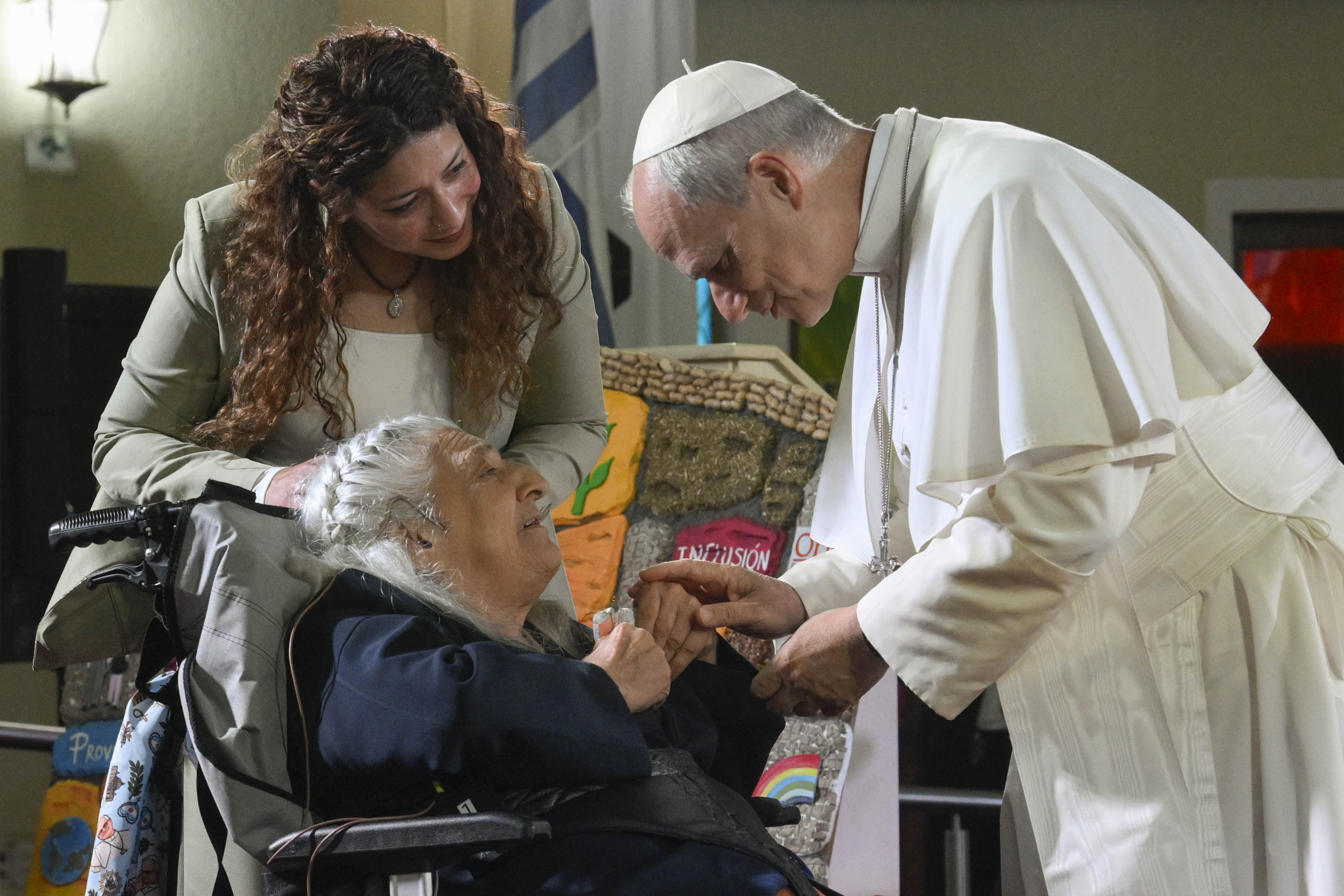
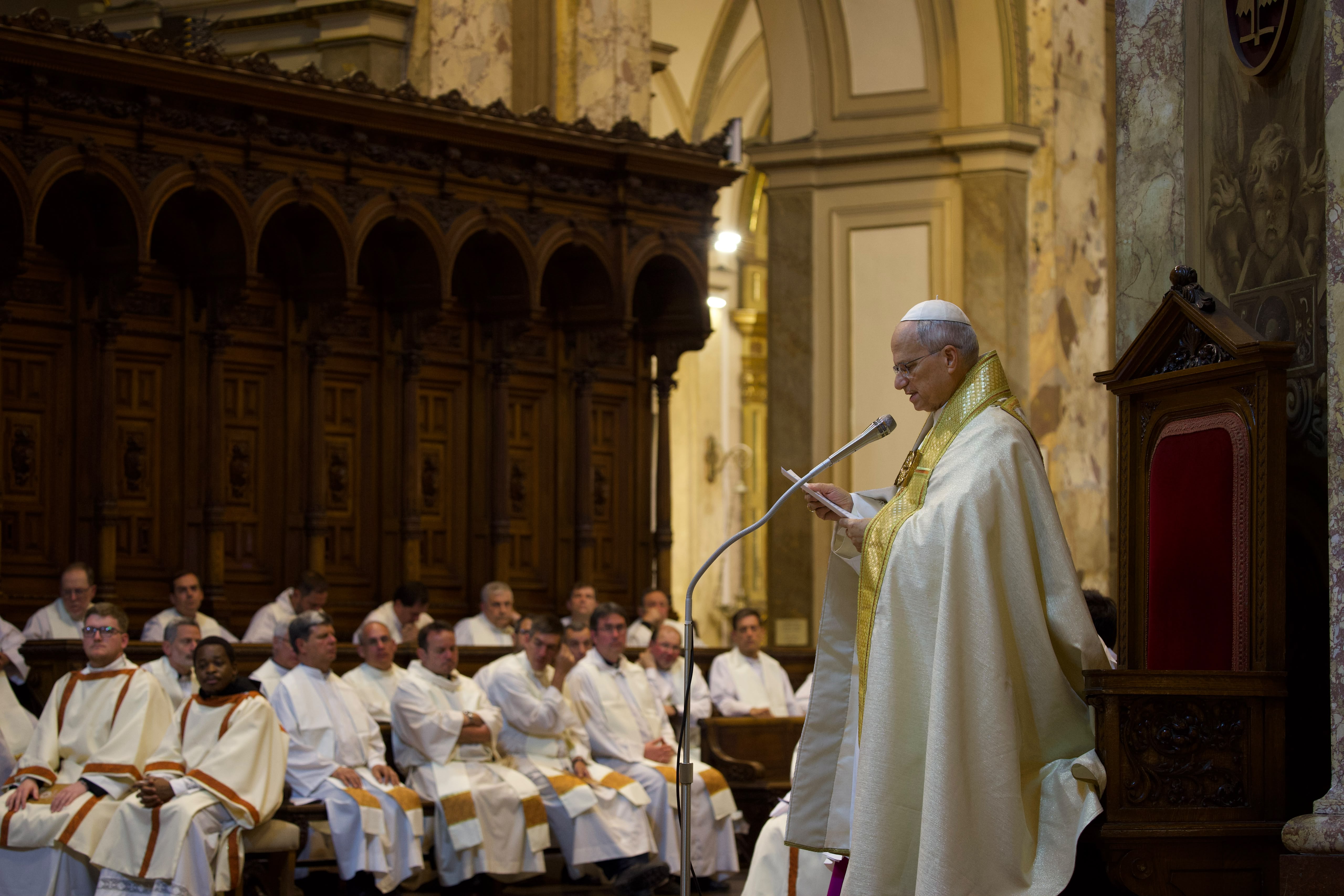
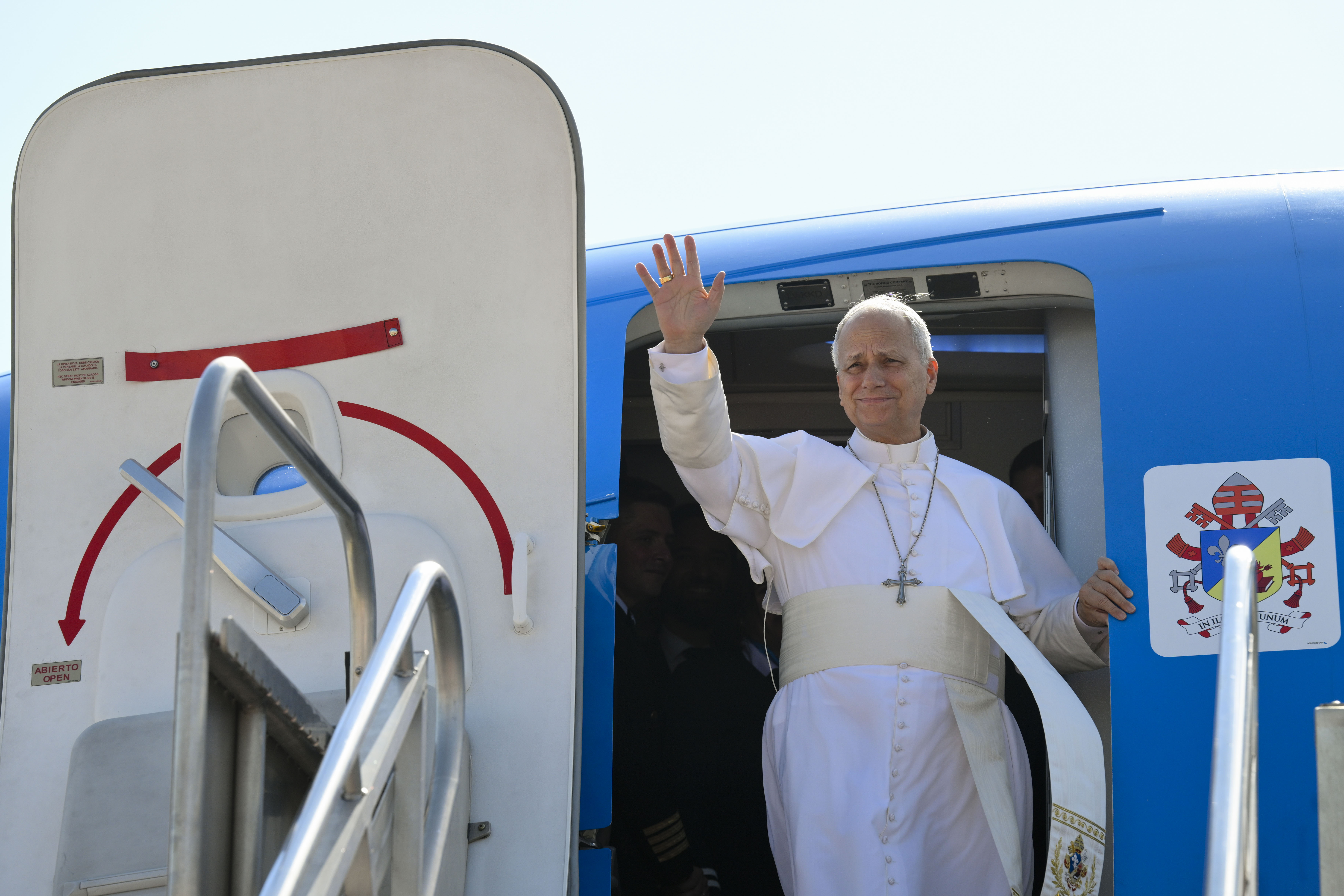
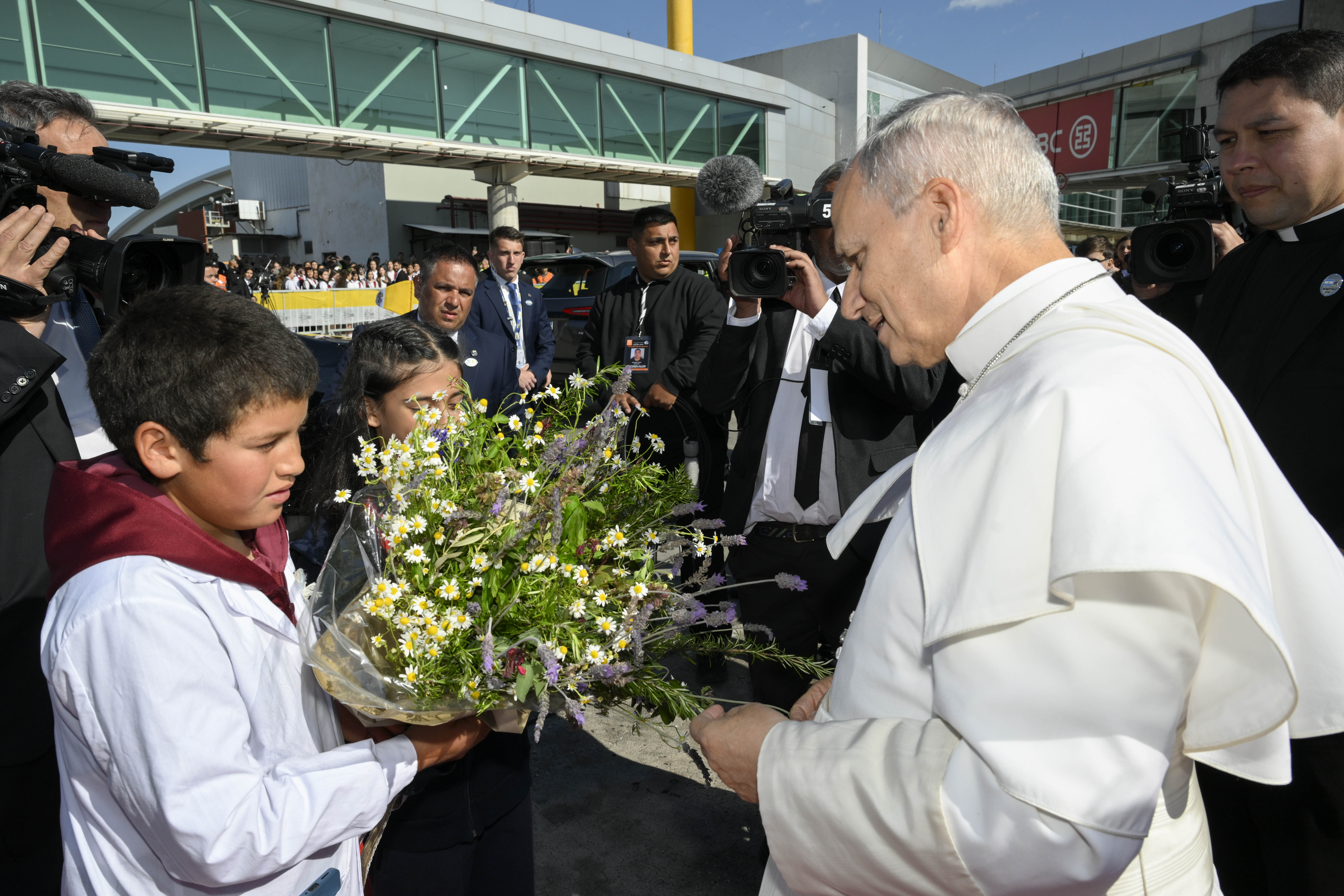
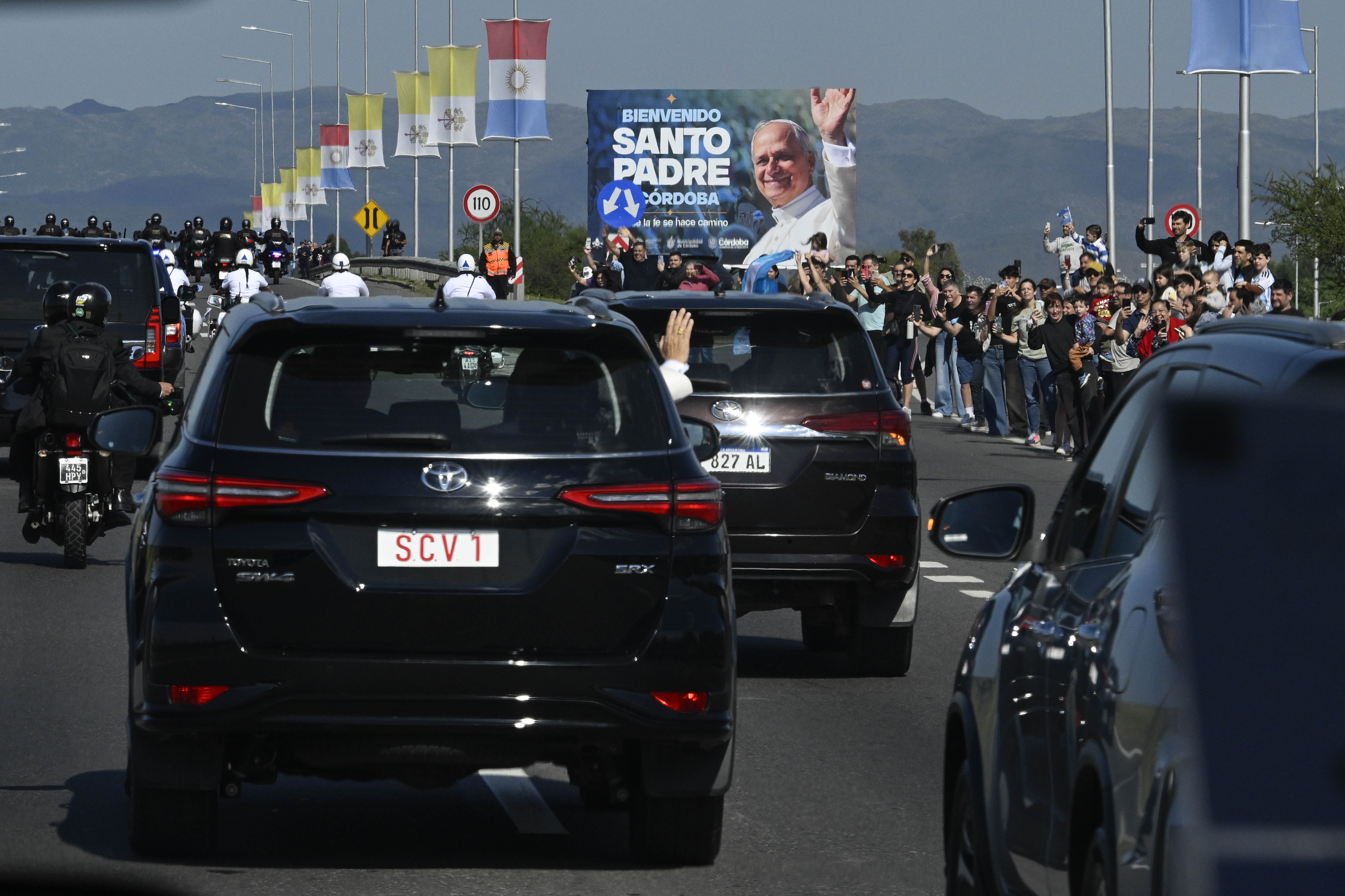
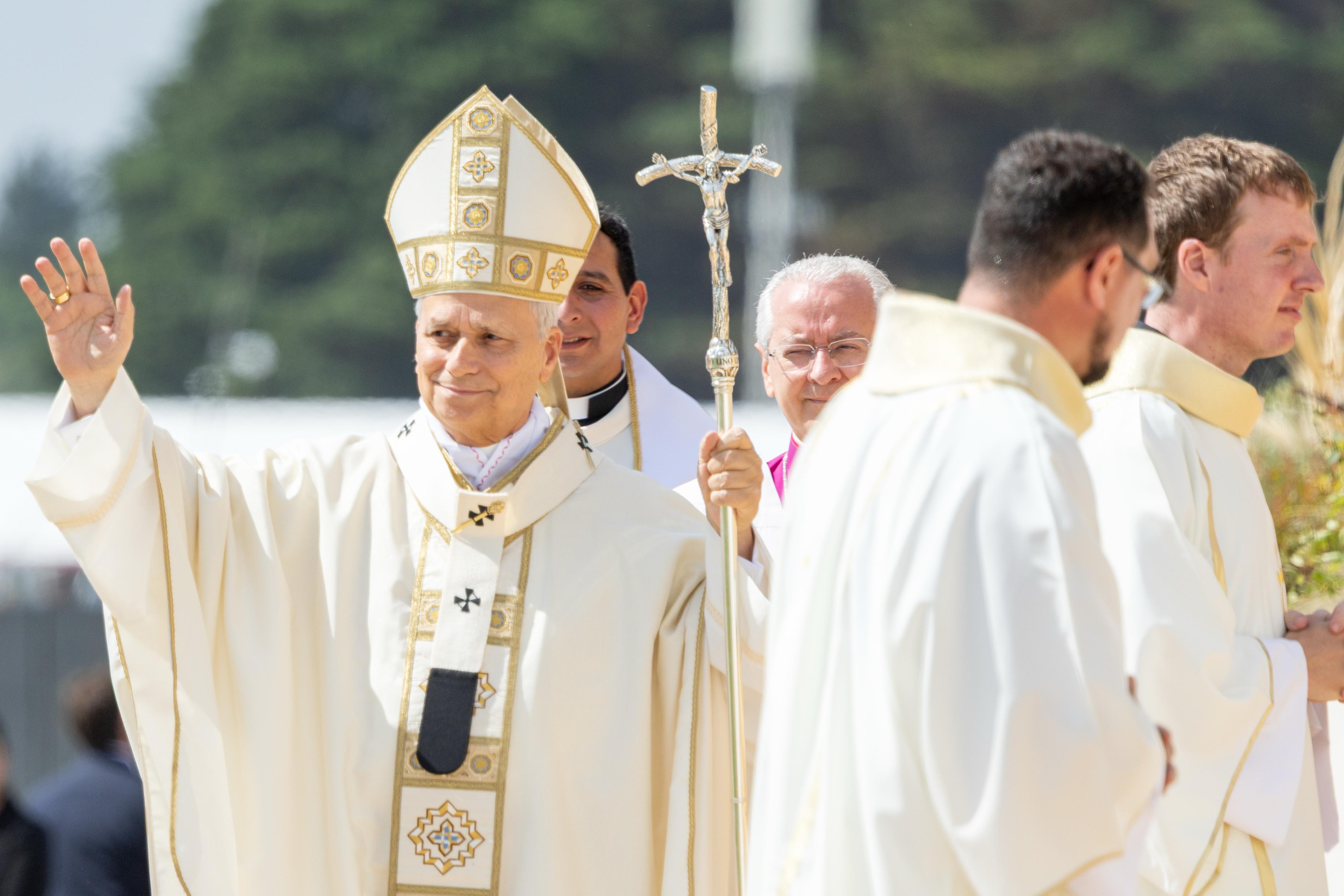
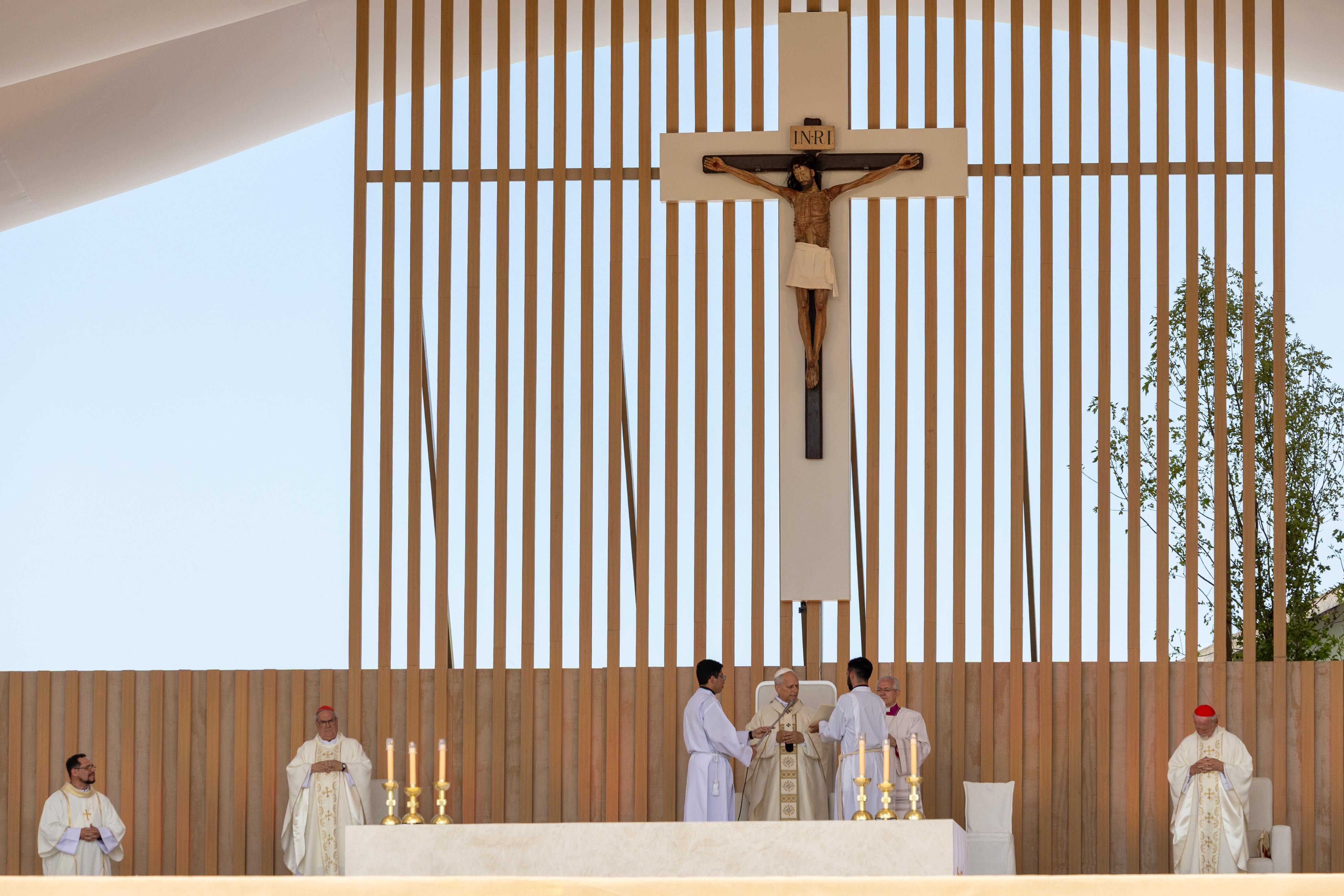
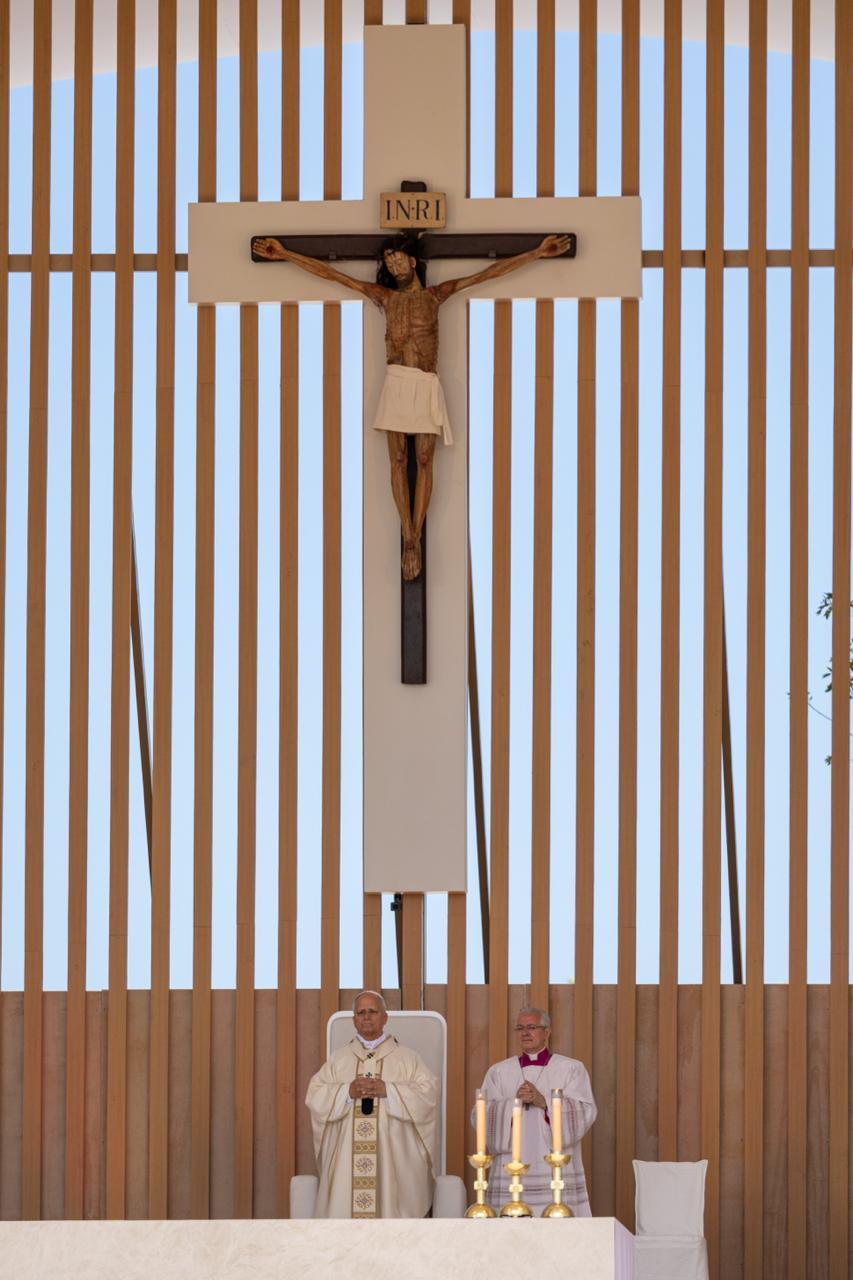
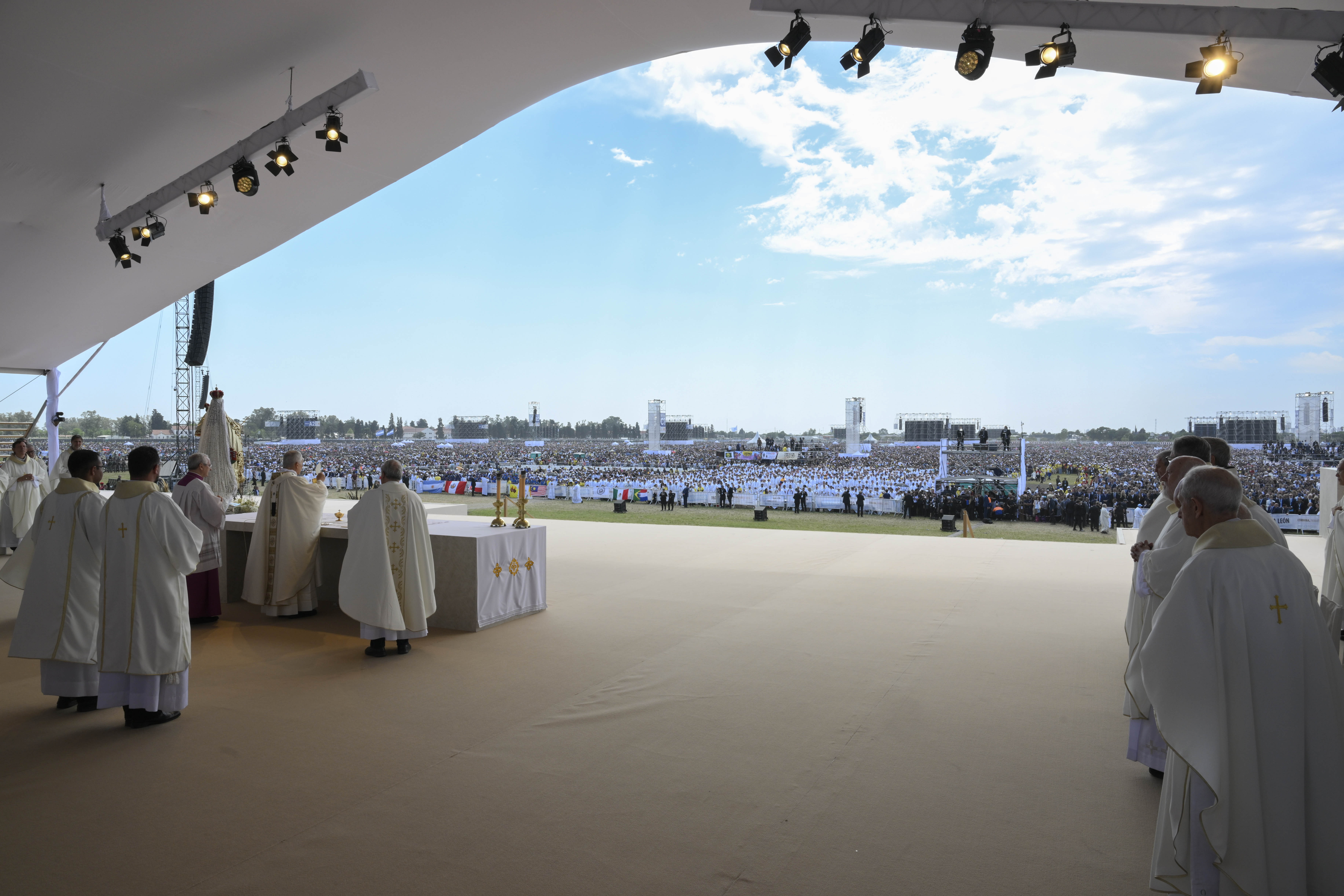
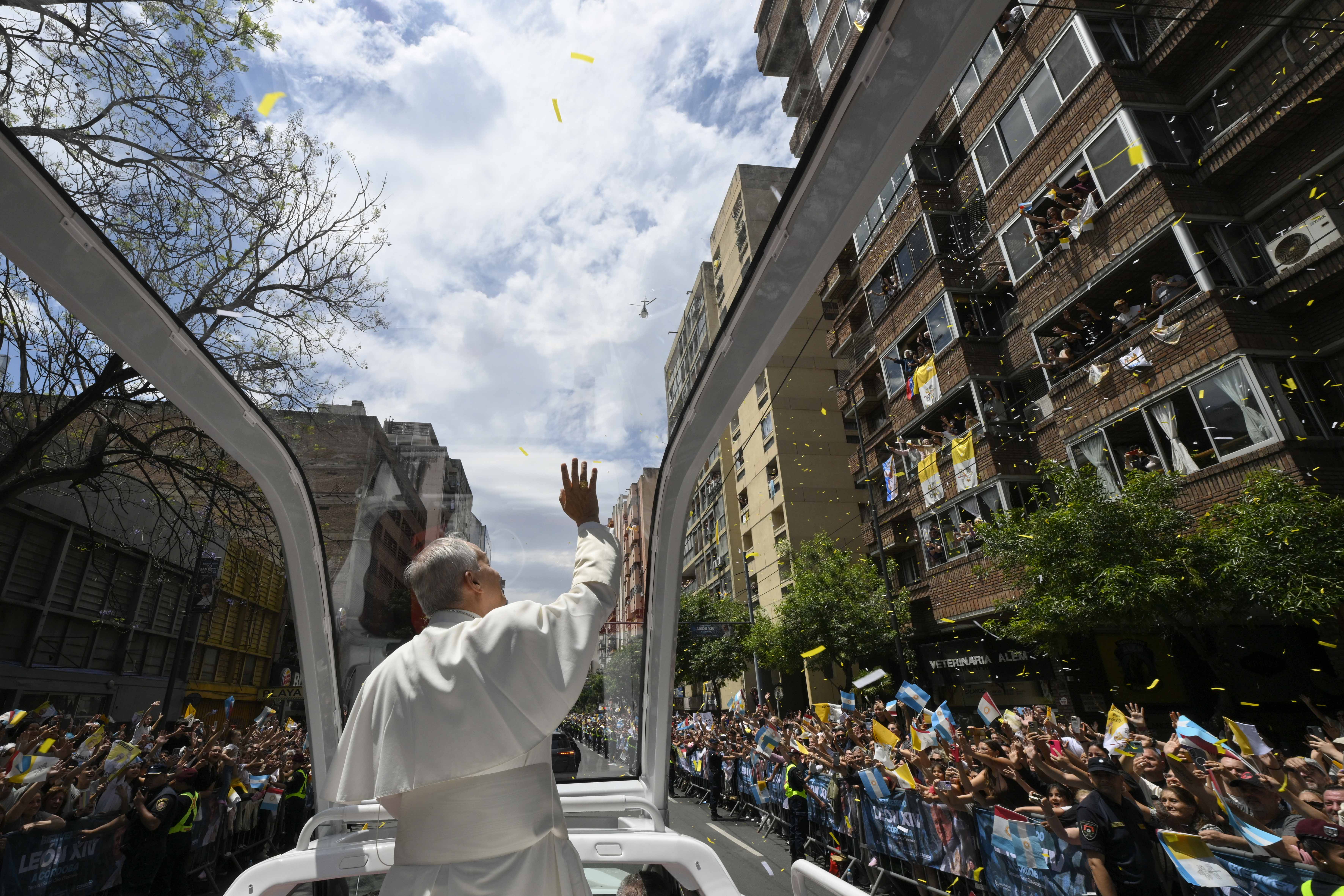
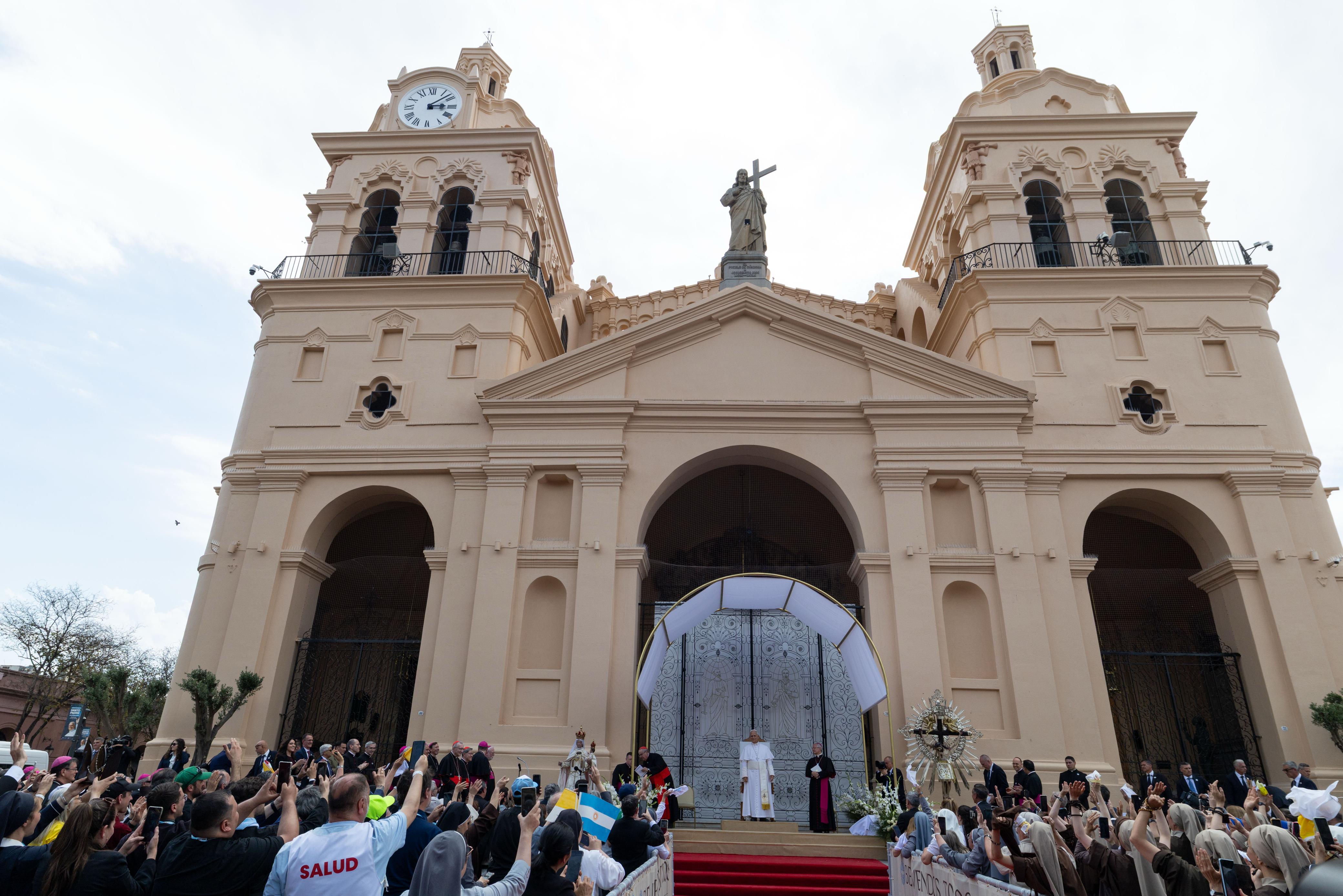
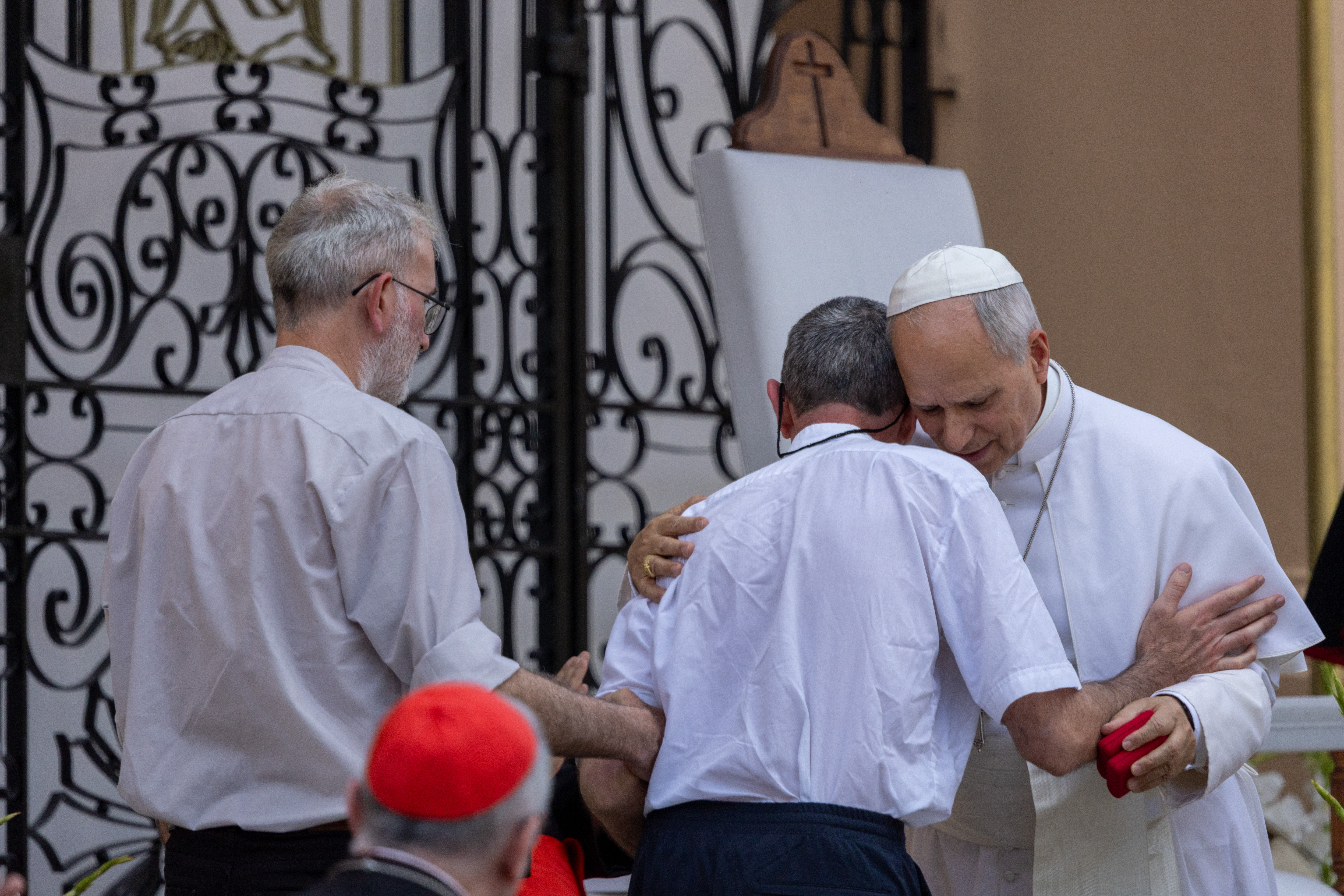
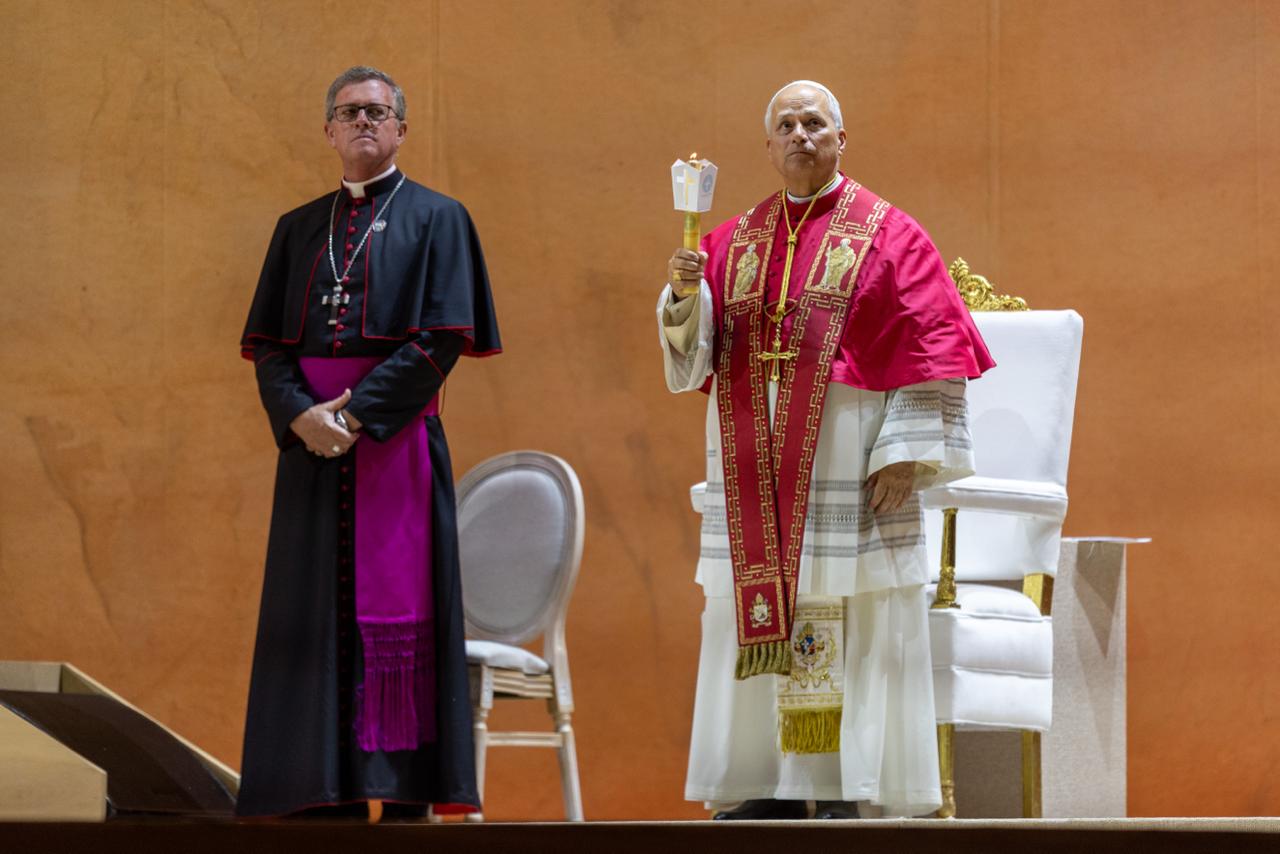
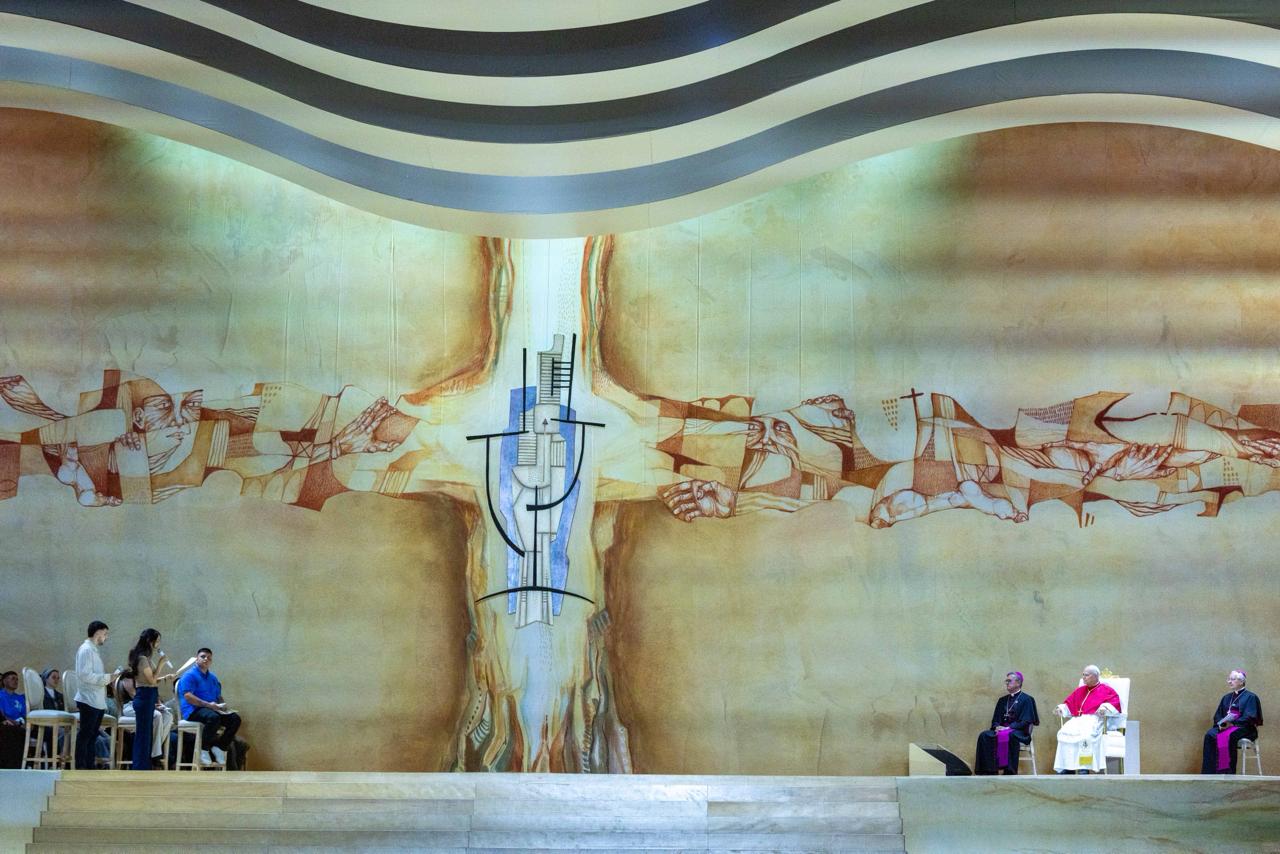
The pontiff echoed Pope Francis' promise that "everyone, everyone, everyone" is welcome in the Church, while insisting that "we all need conversion."
BUENOS AIRES, Argentina — Pope Leo XIV appealed to young people to reject worldly distractions and follow Christ, assuring them that their past mistakes are no obstacle to joining the Church.
"Dear young people, Christ loves us and wants us to share in his own life," Leo told an estimated 1 million participants at a vigil on Nov. 10, his last night in Argentina. "Christ offers you a life that not even death can take away."
The event took place at the same site in northern Buenos Aires where Leo had celebrated Mass the previous day, drawing an estimated 2.5 million people. The crowds in Argentina have been by far the largest of his pontificate.
The pope's speech came after testimonies and questions from young people, including a man recovering from drug addiction.
Leo urged his listeners to reject what he called "the idols of our time," which cannot provide happiness or life.
"Idols arise and demand our worship: success at any cost, money, an obsession with appearance, popularity or the unrestrained pursuit of pleasure. Sometimes, in order to win the approval of others, we may go so far as to lie, betray or humiliate someone on social media," the pope said.
"There are also those who make a business of offering pleasures that ultimately enslave us, such as pornography and addictive substances," he added.
Leo cited Pope Francis' insistence that "everyone, everyone, everyone" is welcome in the Church.
"Whoever you are and whatever you may have done, Jesus Christ knows you, loves you and wants you to be close to him," the pope said. "No one has fallen so low that Christ cannot raise them up."
He added that "we all need conversion" and that welcome is not the equivalent of moral indifference.
"Christ loves us as we are, but his love is too great to leave us prisoners of sin, of what destroys us," Leo said. "There are wounds to be healed, failings to be acknowledged and, whenever possible, wrongs to be made right."
He urged his listeners to confess their sins, pray, read Scripture and receive the Eucharist in order to be transformed by Christ.
"Share your bread with those who are hungry, open your doors to those who have no home, visit the sick and those whom no one wants to visit," the pope told his young listeners, as part of his program for their pursuit of sanctity.
On Wednesday, following a pilgrimage to Argentina's most prominent Marian shrine, in Luján, Leo was scheduled to leave for Peru, the last stop on his tour of South America.
Pope Leo XIV is back in Buenos Aires after Mass in Córdoba. Tonight he leads a youth vigil at the Monumento de los Españoles. On Wednesday he celebrates Mass at Luján, then flies to Peru.
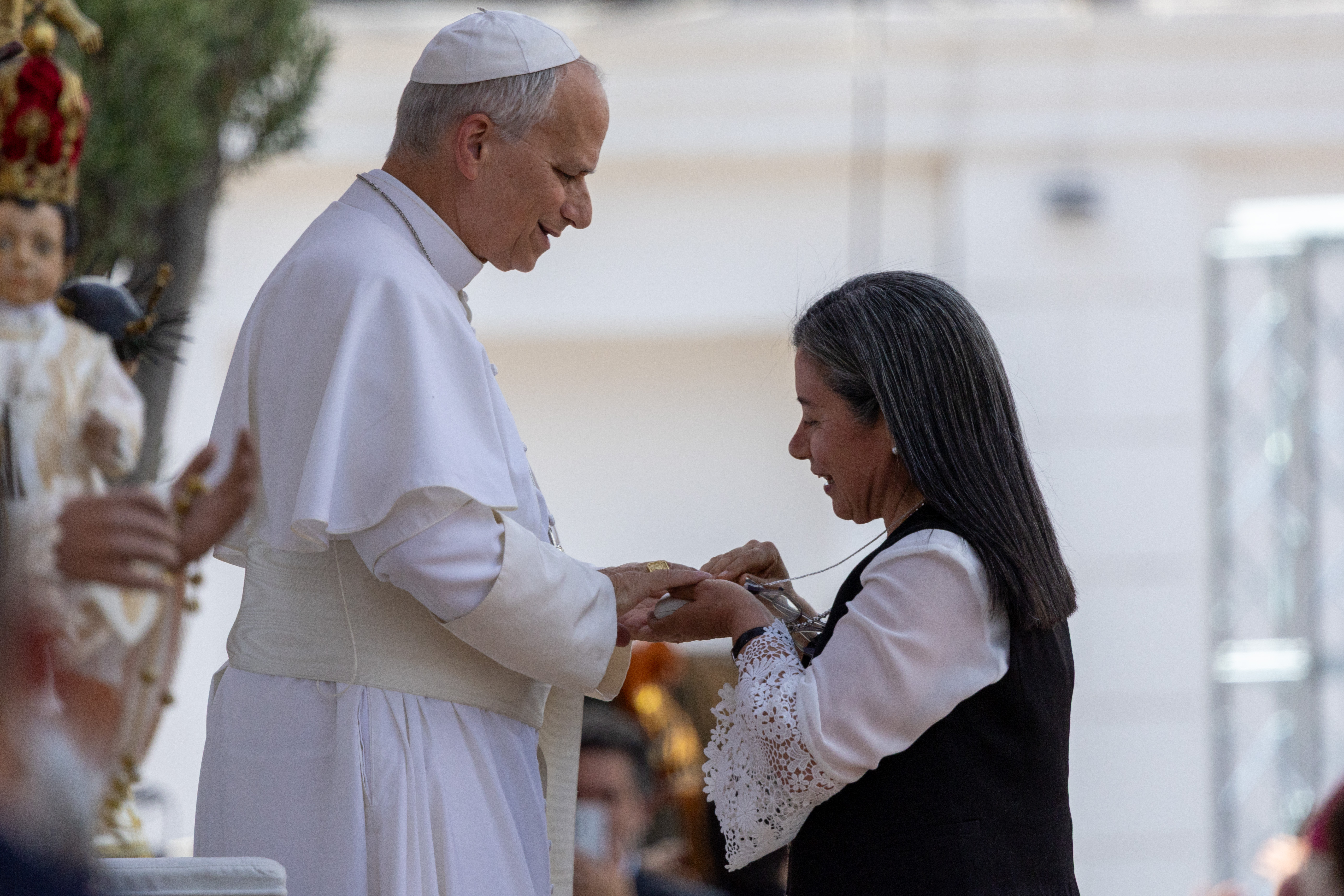
Pope Leo XIV was moved by the inner strength she showed during his visit to the Pequeño Cottolengo of Claypole, where she has lived for years.
Marta Torres is 78 years old and her deep blue eyes seem to pierce through whoever listens to her. She moves about in a wheelchair and due to her physical limitations, she is always looking upward.
Pope Leo XIV was visibly moved when speaking to her during his Nov. 9 visit to the Little Cottolengo Don Orione of Claypole in Buenos Aires, where she has lived for years.
Born blind and with cerebral palsy, she was abandoned by her mother when she was still a child, just a day before celebrating her birthday. "She left my house and never came back," she told Leo XIV, who listened to her with the tenderness of a father.
Her illness turned her life into an uphill, difficult path, she said. For decades, she spent hours bedridden in a hospital, while unsuccessfully seeking a place where she could live on a permanent basis and receive the care she needed.
"I went around to many places in order to find a place to live, but those places were temporary and not suitable for me," she explained.
That long search came to an end when she discovered the Little Cottolengo Don Orione of Claypole, an institution founded by St. Louis Orione that welcomes people with disabilities and in vulnerable situations.
"For me it was a beacon of light that illuminated my life. Not just a place to live, but a place where I was received, given a home, and loved," Torres recounted. The pope listened with all his heart to every one of her words.
This center in Buenos Aires, where Torres lives along with 410 other people with different disabilities, is a community that she said welcomed her unconditionally.
"They helped me not feel rejected, because after so much going around and finding nothing, I felt rejected. But here I feel so happy that everything is behind me," she shared.
Discovering faith
During her testimony, Torres highlighted that one of the greatest graces received at the Cottolengo was faith in Jesus Christ, which she said became an anchor to hold on to when facing her disability: "I came to know God deeply through the people who accompanied me in prayer," she said. With the desire to help others going through similar situations, Torres decided to write a book in which she recounts her personal experience.
After she finished sharing her testimony, she gave a copy of her book to the pope as a sign of gratitude and as a way to give a voice to those whose life situation is similar to hers.
"I wish my story to be known and heard, because I want to do good. I want it to be able to serve other people who live in a similar situation, so that they would know they are not alone, that they have the right to be welcomed, loved, and respected," she said before personally handing the book to the Holy Father.
As she carefully placed it in the pope's hands, she said to him: "This book is part of my life. I give it to you in thanksgiving to God for having given me so many things. Many crosses, yes, but also many gifts."
This story was first published by EWTN News Español, the Spanish-language sister service of EWTN News. It has been translated and adapted by EWTN News English.
Pope Leo XIV highlighted Argentine saints and blesseds as enduring models of faith and Christian witness during a Nov. 10 Mass in Córdoba.
Pope Leo XIV recited a list of saints and blesseds as models of faith in a Mass celebrated in Córdoba, Argentina, on Nov. 10.
In his homily, the pope highlighted more than a dozen figures ranging from St. José Gabriel del Rosario Brochero and St. María Antonia de Paz y Figueroa, known as Mama Antula, to Blessed Cardinal Eduardo Pironio and Blessed Ceferino Namuncurá, presenting them as enduring models of Christian witness.
"Dear brothers and sisters, these saints and blesseds have already fulfilled their mission on earth. Today, it is our turn to follow the radiant example of holiness they have left with us," Pope Leo said.
"They offer a polyphonic witness to the universal call to holiness of every baptized person: the call to be conformed to Christ," Leo said. "All of them knew how to rise to the challenges of their time, transforming them into opportunities to proclaim the good news — not theoretically, but by shaping their lives to become credible and effective witnesses to Christ's love."
Although some of the saints and blesseds Pope Leo mentioned were born in Spain or Italy, they were closely associated with religious life and ministry in South America, particularly Argentina. Among those he highlighted were:
St. María Antonia de Paz y Figueroa ('Mama Antula')
Known as Mama Antula, St. María Antonia de Paz y Figueroa was an 18th-century Argentine laywoman who kept the Ignatian Spiritual Exercises alive after the Jesuits were expelled from Spanish territories. She traveled thousands of miles on foot to help renew Catholic life across the region and became the first Argentine woman to be canonized a saint.
St. José Gabriel del Rosario Brochero
Known as the "gaucho priest," St. José Gabriel del Rosario Brochero served remote communities in the mountains of Córdoba. He crossed difficult terrain on muleback to minister to the poor. He built churches, schools, and roads, and continued serving after contracting leprosy. He eventually became blind and deaf and spent his last few years living with his sisters at home. Brochero died on Jan. 26, 1914. His last words were: "Now I have everything ready for the journey."
St. Nazaria Ignacia March Mesa
Born in 1889 in Madrid, Spain, St. Nazaria Ignacia March Mesa became a missionary religious sister whose ministry was centered largely in Bolivia and Argentina. She founded the Missionary Crusaders of the Church and dedicated herself to evangelization, education, and assistance to the poor. Her order cared for soldiers on both sides of the 1932-1935 war between Paraguay and Bolivia, and she survived persecutions in Spain during the Spanish Civil War.
Blessed Catalina de María Rodríguez
A native of Córdoba, Blessed Catalina de María Rodríguez founded the Sisters of the Holy Family. She focused on educating young people and fostering the spiritual formation of families, especially in underserved areas. She dedicated herself to promoting the Spiritual Exercises of St. Ignatius.
Prior to entering religious life, in 1852, she married Manuel Antonio de Zavalía, a widower with two children. Zavalia threatened suicide if Saturnina refused him, and her spiritual director declared her responsible for the salvation of his soul, so she took the marriage to be God's will. Saturnina conceived one child, who was stillborn.
After her husband's death, her lifelong desire to enter religious life reemerged as she was adoring the Blessed Sacrament. After seven years of trials and setbacks, she still maintained her spirits because "that idea was embedded in my soul and even if I wanted to I could not do away with it" and in those attempts to pursue her dream said: "I found consolation in God, from whom I hoped for everything, and I never lacked confidence in him."
Blessed María Ludovica de Angelis
Born in Italy, María Ludovica spent most of her religious life in Argentina, where she worked for decades at a children's hospital in La Plata. The first miracle attributed to Blessed Maria was that of Antonella Cristelli, a young girl suffering from spinal bifida, which affected her urinary tract, bladder, and kidneys and left her unable to move her arms and legs. She was inexplicably cured after praying to Blessed Maria. John Paul II beatified the religious sister in October 2004.
Blessed Ceferino Namuncurá
The son of a Mapuche chief, Blessed Ceferino Namuncurá was an Indigenous Argentine youth who studied under the Salesians and became known for his deep faith and desire to serve his people. He died of tuberculosis at age 18 and is widely venerated as a model for Indigenous Catholics and young people.
Blessed Cardinal Eduardo Pironio
Blessed Cardinal Eduardo Pironio of Argentina served in senior Vatican roles and was a close collaborator of several popes. He was especially known for promoting hope, evangelization, and youth ministry, helping lay the groundwork for what became World Youth Day.
The Archdiocese of Portland asked lay people to refrain from raising their hands and holding hands during the Lord's prayer at Mass, citing various Church documents concerning liturgical norms.
The Archdiocese of Portland, Oregon, has asked laypeople to refrain from holding hands or raising their hands during the Our Father prayer at Masses in the archdiocese.
While the Catholic liturgy is fairly uniform across Catholic parishes, some Mass attendees raise their hands in the "orans" posture of prayer or hold hands during the Our Father prayer, while others don't. The Archdiocese of Portland through an official instruction has asked laypeople to refrain from doing either.
"Over the last few decades there has been some confusion as to whether the lay faithful should extend or raise their hands (and even holding hands with others) when the Lord's Prayer is prayed during Mass, as the priest does," stated the announcement in the Archdiocese of Portland's November 2026 issue of its Divine Worship Newsletter.
"Neither the deacons assisting at Mass, nor the lay faithful, are ever instructed to use this posture," the announcement continued. "It is a liturgical posture that is proper to the priest. When the priest uses this posture, he is praying on behalf of the people."
In arriving at its decision, the archdiocese cited various Church documents and instructions concerning liturgical norms.
The archdiocese referred to the General Instruction of the Roman Missal (GIRM), a foundational Vatican document on liturgy.
"While the GIRM does not explicitly forbid the lay faithful from using the Orans posture during the Our Father, it gives guidance as to why the lay faithful should not use this posture," the announcement read. "Whenever the GIRM gives the instructions for hands to be extended, it is always with reference to the priest specifically, whether it be the principal celebrant or concelebrants."
The archdiocese also referenced instructions given in Vatican II documents.
"Further, the Second Vatican Council's Constitution on Sacred Liturgy, Sacrosanctum Concilium, states that 'no other person, even if he be a priest, may add, remove, or change anything in the liturgy on his own authority.' (SC 22.3)," the archdiocese continued. "Since the GIRM is very specific that the priest is instructed by the GIRM (152) to extend his hands when he prays the Lord's Prayer, for the deacons or the laity to extend their hands would be adding to the liturgy."
The archdiocese also referenced the Church's guiding legal system, the Code of Canon Law.
"The Church gives further guidance on this issue. Code of Canon Law (CIC) 907 states, 'In the Eucharistic celebration deacons and lay persons are not permitted to offer prayers, especially the Eucharistic prayer, or to perform actions which are proper to the celebrating priest,'" the document states.
Finally, the archdiocese cited tradition prior to the New Roman Missal of 1970.
"Prior to the New Roman Missal of 1970, only the priest prayed the Lord's Prayer as a part of the Liturgy and had his hands extended while he prayed on behalf of the people. Nothing in the Roman Missal of 1970, nor the documents of the Second Vatican Council, indicated that there would be a change in posture during the Lord's Prayer."
Where does the 'orans' posture come from?
In the Catholic liturgy, the priest takes on the "orans" posture as a sign of praying on behalf of the people.
The posture was common in most ancient religions. In Christianity, it can be seen throughout Scripture, memorably in Exodus 17 when Moses lifts his hands during the battle against Amalek. While his hands are raised, the Israelites are winning, but when his hands fall, they start to lose the battle.
This posture can also be seen throughout some of the Psalms and in the New Testament as well. The "orans" posture of prayer is also depicted in early Christian art, including in the catacombs.
The conference comes amid debates about the moral legitimacy of military action and the responsibility of political leaders and service members to uphold the Church's teaching on war and peace.
A few hundred people — including active duty members of the military and veterans — attended the Catholic Military Conference this week, which featured talks and panels on just war doctrine, the duties of Catholic soldiers, and other subjects.
The conference, organized by the Archdiocese for the Military Services, USA, is being held in Chantilly, Virginia, from Nov. 9–11. It hosted speakers including the Military Services Archbishop Timothy Broglio, lay theologians Joseph E. Capizzi and Matthew Bunson, and military veterans.
A theme of the talks was the negative consequences of any war. Even though war can be permitted under certain circumstances, the speakers emphasized the duty of political leaders to ensure that every criteria of just war doctrine is met when launching a war and to avoid it if at all possible.
According to the Catechism of the Catholic Church, war can only be justified to confront a grave evil, the evil caused by the war cannot exceed the evil it seeks to end, all alternatives to war must be sought before it is waged, and the goals must have a real chance of success.
Duty to seek peace
"Fighting involves killing," retired Lt. Gen. James M. Dubik — a commander in the Iraq War who also served in Afghanistan and several other countries — said in his talk.
War, according to Dubik, is "not just killing the combatants" but also includes "the killing of the innocents who are always caught up in wars." It "damages lives and changes lives" and has an impact on relationships, communities, and sometimes a nation, he warned.
Dubik, who holds a doctorate in philosophy and works as a senior fellow at the Institute for the Study of War and as a professor at Georgetown University's security studies program, said that "even when you do everything as right as possible" and even when the acts are "completely justified," "the soul of the individual, the relationships, the communities, are damaged."
Decisions to go to war and decisions on the battlefield, Dubik said, "can cost people their lives."
"This is why wars should always be fought and waged prudently," Dubik said. "They should be fought and waged sparingly, as a last resort."
Due to the severity of war, he said society needs a "robust" and "coherent" just war doctrine that leaders follow. The decision to go to war, he said, "can never be an amoral or aspiritual affair."
At the conference, Capizzi, director for Notre Dame University's McGrath Institute for Church Life, and Bunson, vice president and editorial director of EWTN News, talked about how the Catholic teaching of just war doctrine seeks to offer guidance to political leaders.
Given the consequences of any war, Capizzi explained that this is why the Church rejects the notion of "realpolitik," which analyzes the subject through a strategic lens as opposed to a moral one.
Capizzi cited St. Augustine's letter to the Roman general Boniface, noting that it's important to emphasize war "should never be desired for its own sake." He said it should "never be motivated by vengeance, wealth, glory, or vendetta, but rather it has to serve justice, it has to serve the community."
"The men and women who serve in our military must be and are peacemakers when they remember that," he said.
Seeking peace with Iran
Although the conference speakers mostly avoided weighing in on justifications for the ongoing war with Iran, Broglio discussed the application of just war doctrine to the conflict.
President Donald Trump told CNN on Sunday, Nov. 8, that it is "highly unlikely" he will escalate the war with Iran but that this depends on "whether or not they sign a very strong agreement," threatening to "hit them really hard" if a deal is not reached.
Speaking to EWTN News during the conference, Broglio said "everything should be done to encourage dialogue" between Iran and the U.S., with a goal toward peace. He said "everything should be done to avoid war."
"War is always the last possible option," he said.
If there is an escalation, Broglio expressed concern over rhetoric about hitting infrastructure that civilians depend on, saying "many of those structures … support the defenses of an enemy" but "also support the civilian population." He said civilian harm "should be avoided at all cost."
Broglio said decisions moving forward must keep in mind "the innocent person who is always involved in these situations … [who] frequently runs the risk of losing his or her life." He said "the dignity of that person" must be a priority when making these decisions.
"If unfortunately there is an escalation," the archbishop said, "then that's really to be deplored, but certainly … [officials must] keep [civilian harm] as minimal as possible and on the lowest level possible."
Pope Leo XIV arrived on Tuesday in Córdoba for Mass and a meeting with clergy and religious.
The state's bishops said the new "all-nine-months" abortion bill reflects a "utilitarian and merciless approach" to human life.
The Catholic bishops of Massachusetts have rebuked Gov. Maura Healey for enacting an unrestricted abortion bill into law and citing her Catholic faith while doing so.
On Nov. 6, Healey attached an emergency preamble to an all-nine-months abortion bill she signed Aug. 10, which under the state constitution made the new law take effect immediately.
Her action also prevented the suspension of the new abortion law pending a statewide referendum on it expected in November 2028.
In a 1,400-word Substack article, Healey justified her decision to enact the abortion bill immediately, citing her Catholicism.
"I am Catholic, and my faith is an important part of who I am. It has shaped my understanding of service, responsibility and our obligation to care for others. My faith teaches me to meet people with compassion, respect their dignity, and approach suffering with humility," Healey wrote.
"I am also Governor for people of every faith and belief," she continued. "My responsibility is to ensure that every family can make deeply personal medical decisions according to their own circumstances, values and the guidance of their doctors."
Over the weekend, Boston Archbishop Richard Henning and the bishops who lead the state's three other Catholic dioceses criticized Healey's rationale.
"Having read the Governor's editorial defending her decision to override the results of the Repeal 188 efforts, we respectfully and passionately disagree that abortion, the taking of human life, may be considered health care," they said Nov. 7 in a written statement.
"We also disagree that there is an emergency requiring the further expansion of the existing and already radically permissive law," the bishops said. The letter was also signed by Worcester Bishop Robert McManus, Fall River Bishop Edgar da Cunha, and Springfield Bishop William Byrne.
'Utilitarian and merciless approach'
Before Healey's action, Massachusetts state abortion law, which was amended in 2020, previously allowed unlimited abortions up to 24 weeks and after that to save the life or the "physical or mental health" of the mother or if "the fetus is incompatible with sustained life outside the uterus."
The new statute enacted by the governor removes those limitations, stating instead that abortions at any time in pregnancy "may be performed by a physician based upon the professional judgment of the physician."
The state's bishops noted that Pope Leo XIV recently told leaders in Uruguay that the unborn "already belong to the human family" and that their dependence on their mother "does not diminish the dignity to which they are entitled or the protection they deserve."
"We call upon the legislators who crafted and passed this bill, and all men and women of good will, to reconsider the troubling state of our culture and its utilitarian and merciless approach to the elderly, the sick, the vulnerable, and the unborn," the Massachusetts bishops said. "As Pope Leo put it: 'The right to life is the indispensable foundation of every other human right.'"
A spokesman for Healey contacted by the National Catholic Register, the sister partner of EWTN News, referred questions about the bishops' criticism of her to Healey's Substack article.
Repeal effort on hold
Opponents of the new abortion measure, which is known as Chapter 188 of Massachusetts General Laws, collected more than 100,000 signatures of registered voters earlier this fall to challenge it.
Under the state constitution, that's more than double the number needed to stop a law from going into effect unless the governor enacts it immediately with an emergency preamble, as Healey did.
As for the pro-lifers' signature campaign, Healey wrote: "The repeal campaign can continue its work, and Massachusetts voters will have their say. If they choose to repeal the law, we will respect their decision. But families should not have to go without the care they need while that process plays out."
A spokesman for the secretary of state's office said it would likely take a week or two to certify the signatures that would trigger the statewide referendum on the all-nine-months abortion statute two years from now.
Myrna Maloney Flynn, the president of Massachusetts Citizens for Life, told EWTN News that the state constitution "does not include any mechanisms for reversal" of an emergency preamble. But she said pro-life advocates there "are undeterred."
"Though we all share a deep sadness at the distorted messaging women are already hearing more frequently since [the passage of the law], from an industry that aims to profit from their vulnerability, we know truth will ultimately mute false claims," she said.
"And as we prepare our hearts for the imminent loss of life, each of us recognizes the new opportunities for ultimate victory," she continued. "I've been moved to see that Massachusetts residents are not walking away but stepping up once again, more determined than ever."
"We've got a two-year campaign ahead of us, and I am confident that we will have a formidable team to help us repeal Governor Healey's full-term abortion law in 2028," she said.
This story was first published by the National Catholic Register, the sister partner of EWTN News, and has been adapted by EWTN News.