Catholic News
After speaking about the unborn, young people, and civic unity on his first day in Argentina, Leo XIV visited the Cottolengo in Claypole and celebrated Mass in Buenos Aires on Monday.
Work in the Baroque-styled chapel, which houses the ancient "Salus Populi Romani" icon, will begin on Nov. 16.
The Papal Basilica of St. Mary Major in Rome will begin restoration of its Pauline Chapel, a significant work of early Baroque architecture.
The basilica announced plans to restore the chapel's artwork in a press release on Nov. 6. The project, set to begin on Nov. 16, is one of several in an extensive conservation campaign. During work, the chapel will be closed to the public for 90 days.
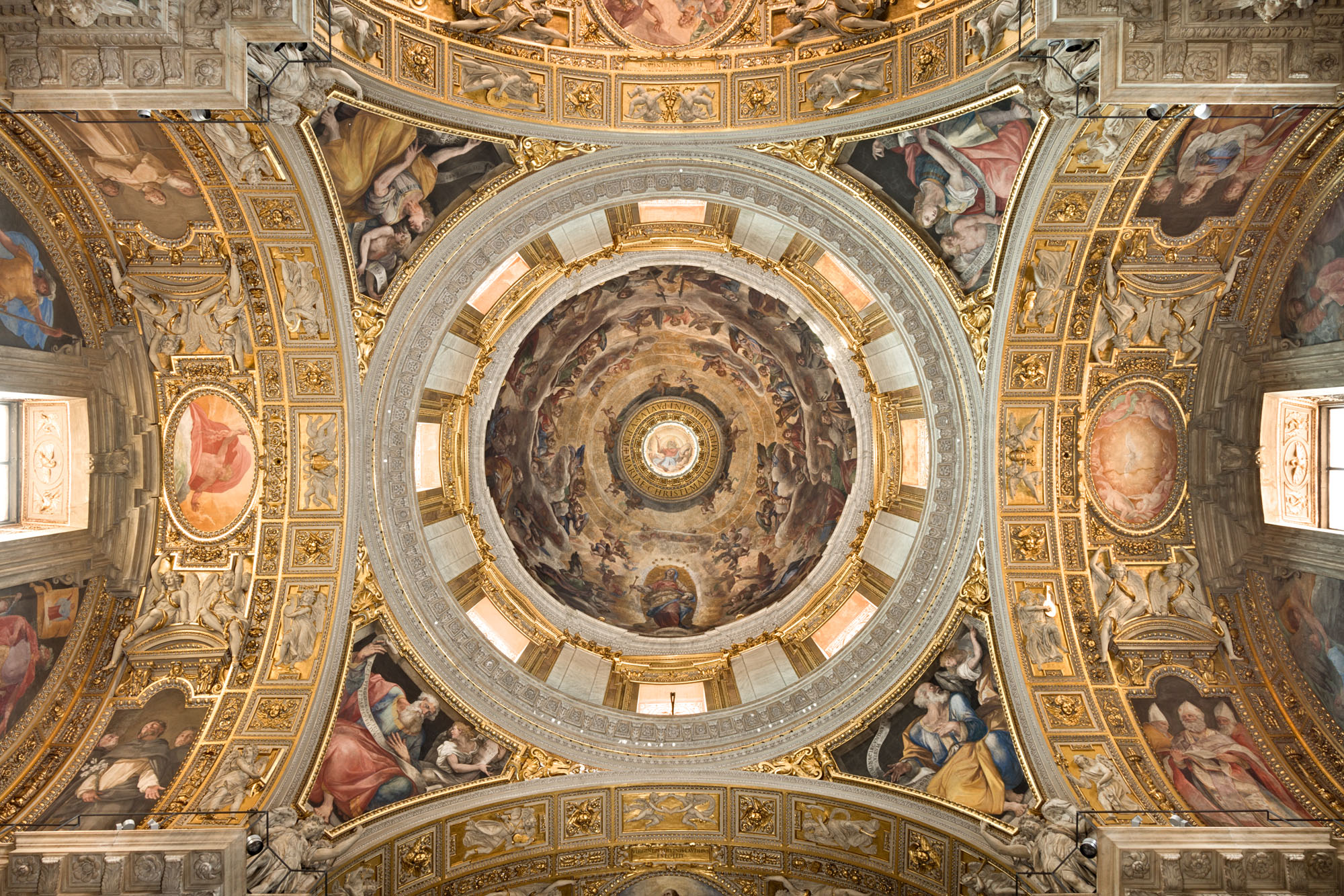
As one of Rome's four major basilicas, the basilica is reputed to be the oldest shrine dedicated to the Virgin Mary in the Western Hemisphere, built shortly after the Council of Ephesus in A.D. 431, which defined the doctrine of Mary as Mother of God.
The project will also be carried out in collaboration with the Governorate of Vatican City State and will focus on the chapel dome and its surrounding frescoes.
Papal devotion and the 'Salus Populi Romani' icon
The Pauline Chapel also houses the ancient Marian icon "Salus Populi Romani" ("Salvation of the Roman People"), depicting Mary and the Christ child.
Tradition holds that St. Luke the Evangelist made the icon. Since its creation, popes have venerated it with liturgical processions and ornate decorations, including St. Gregory the Great and Venerable Pius XII. In 1615, Pope Paul V built an ornate chapel in St. Mary Major to house the icon and solemnly transferred it there.
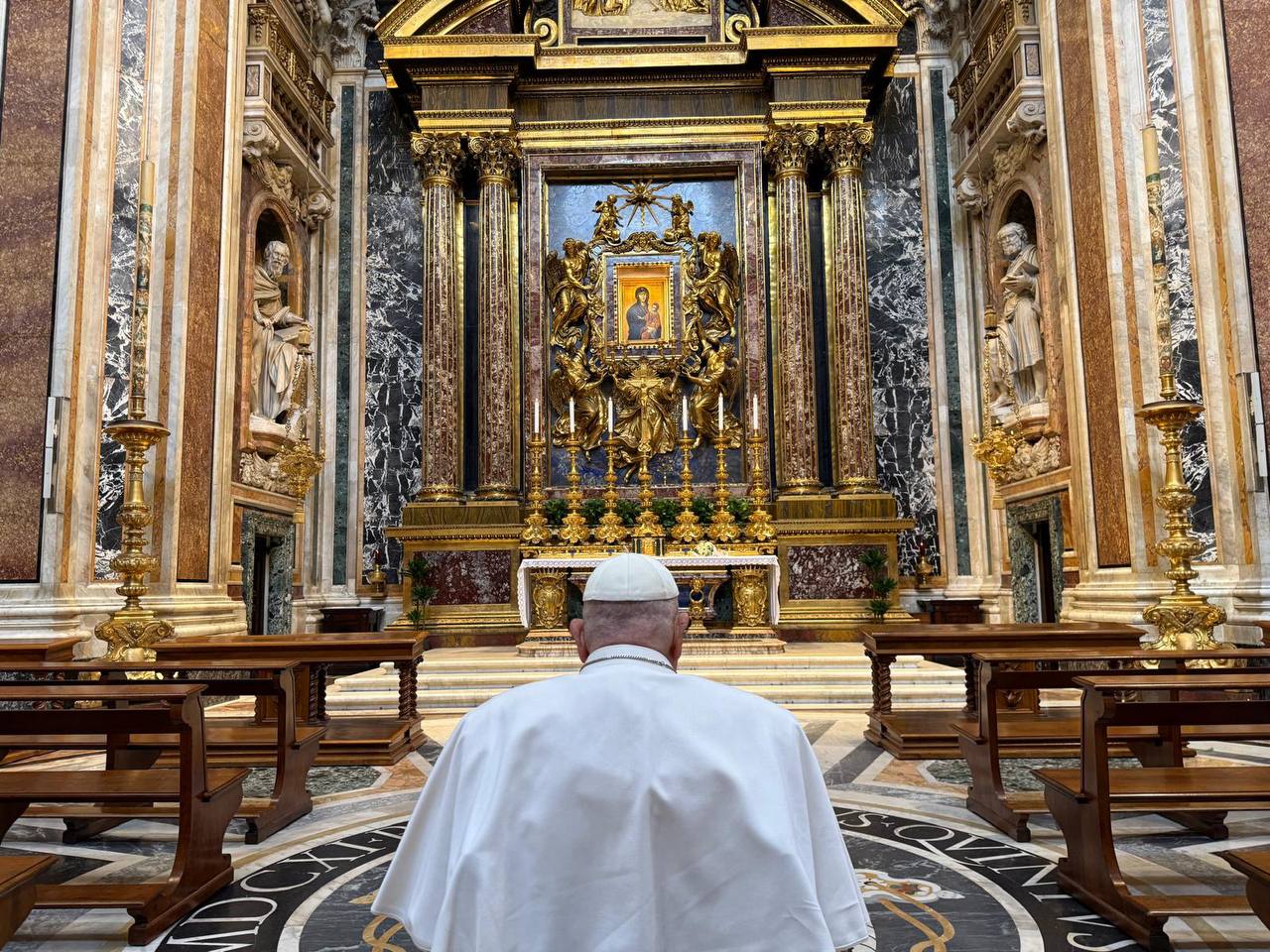
Pope Francis was noted for venerating the icon before and after every apostolic journey, visiting it 126 times in his 12-year pontificate. His tomb, placed near the chapel, was made at the pope's express request to be buried near the icon.
A project to restore Baroque architecture
According to the basilica's press release, Paul V, after whom the basilica is named, commissioned notable artists in 17th-century Rome to decorate the chapel.
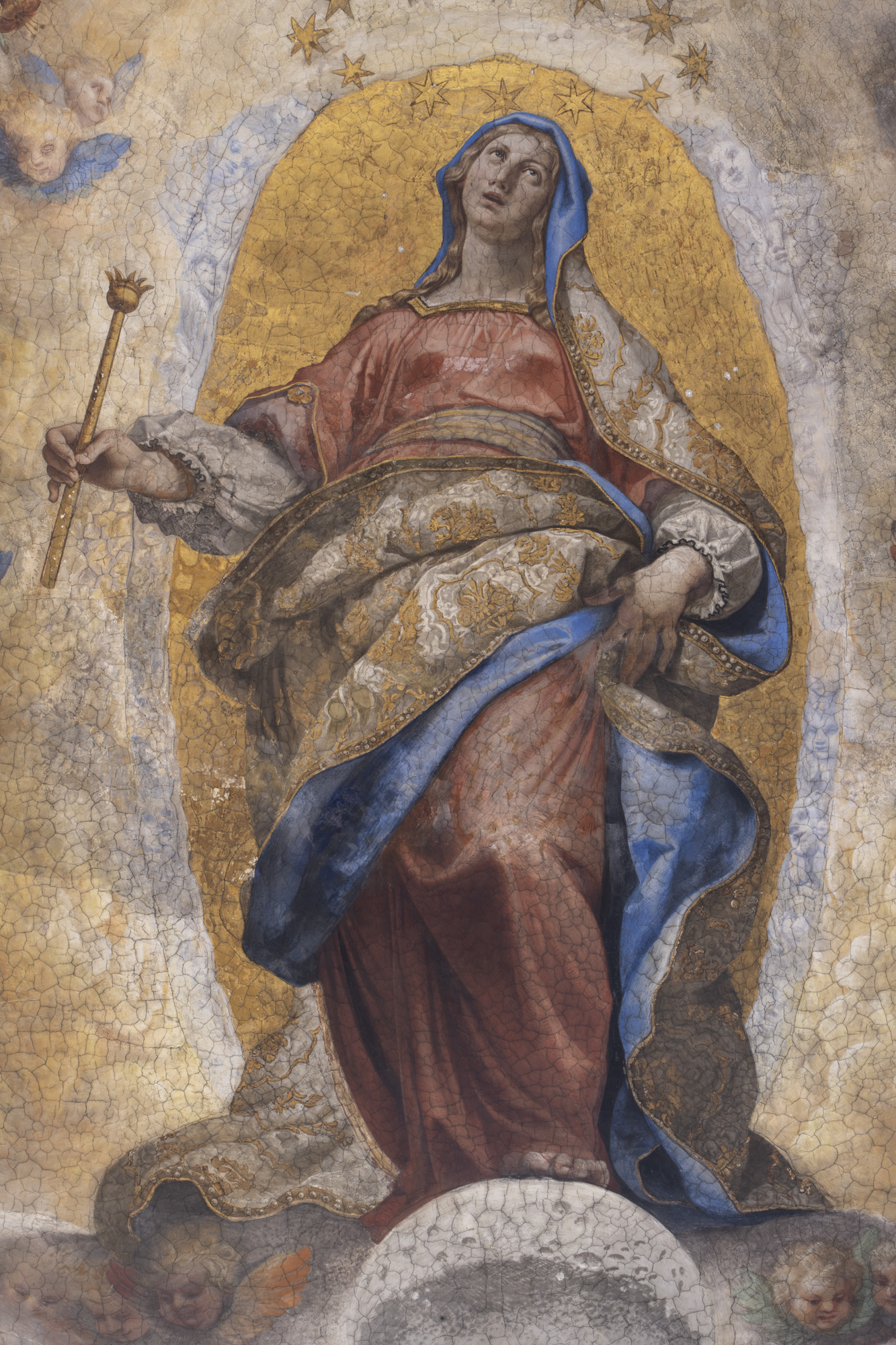
A pictorial cycle surrounding the "Salus Populi Romani" icon centers on the Virgin Mary as mother of the Church. Created from 1610–1612, it involved artists Giovanni Baglione, Lodovico Cardi, Guido Reni, and Giuseppe Cesari.
A prominent feature of the cycle is Cardi's "Assumption of the Virgin." Here, the Virgin stands atop a naturalistic moon, inspired by telescopic images by renowned astronomer Galileo Galilei in 1610.
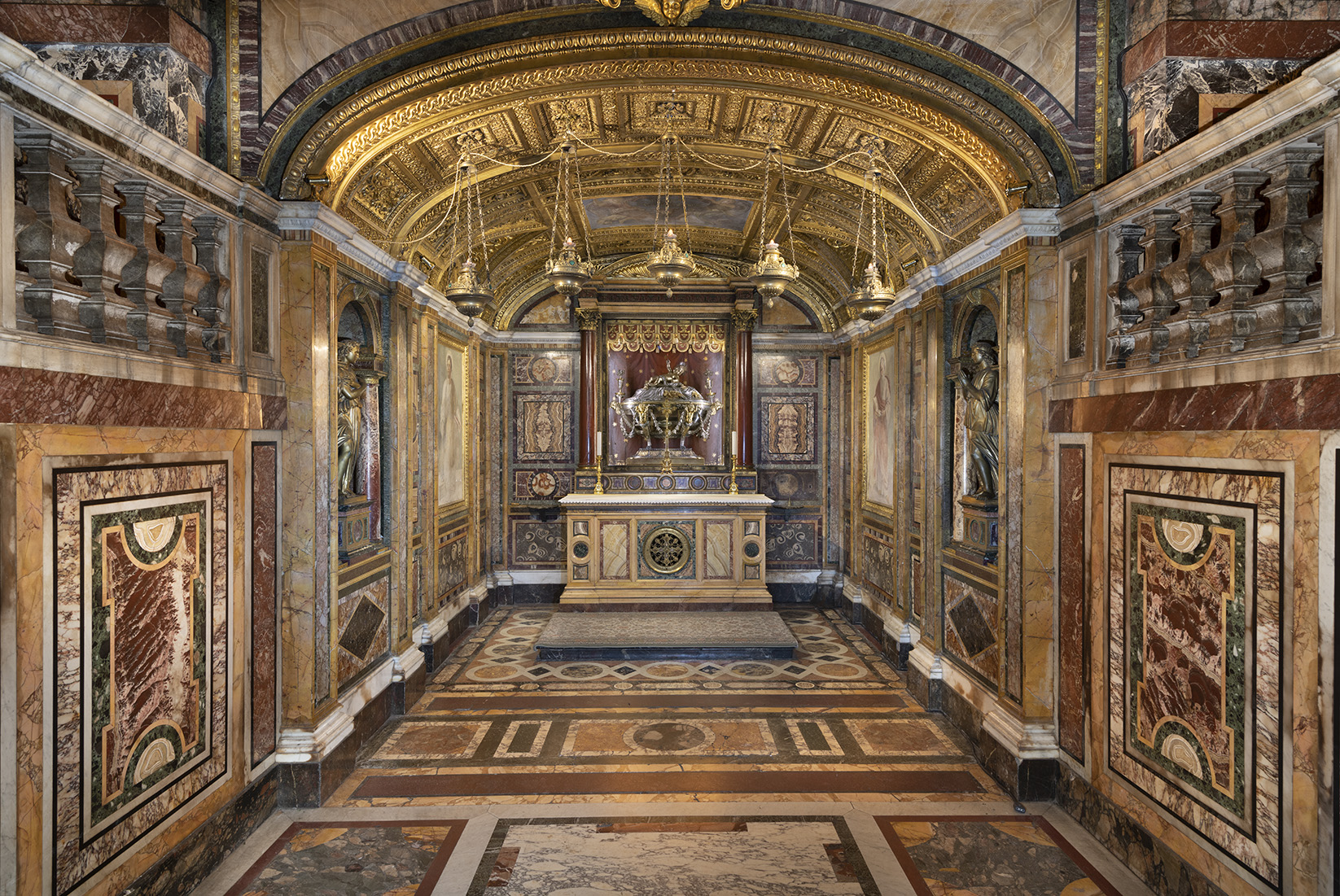
The basilica is also undergoing restoration of the "Confessio" chapel beneath the high altar. As a result, the reliquary of the Holy Crib — containing pieces of wood reputed to come from the manger where Christ was born — has been moved to a side chapel in the right aisle for veneration from Oct. 15 to Dec. 24.
For World Fisheries Day, established globally in 1997, this year's Vatican message connects the historical struggles of maritime workers with timeless spiritual truths.
Ahead of World Fisheries Day, observed annually on Nov. 21, the Vatican's Dicastery for Promoting Integral Human Development has released a message calling the global community to look past commercial statistics and recognize the profound human dignity, deep-seated faith, and daily hardships of the world's fishers and their families.
Rooted in a tradition established globally in 1997, this year's Vatican message connects the historical struggles of maritime workers with timeless spiritual truths. Issued by the dicastery's new prefect, Sister Alessandra Smerilli, the text reflects on the Gospel account of the risen Lord waiting on the shores of Lake Tiberias, offering weary fishermen and women the invitation to "Come and have breakfast."
Smerilli uses this biblical imagery to remind the faithful that Christ is not indifferent to human toil but actively waits on the shores of everyday life, attentive to the exhaustion, anxieties, and concrete needs of those who labor upon the waters.
In the message, Smerilli stresses that the Church must cultivate a culture of encounter that translates spiritual closeness into tangible action.
First, she urges society to truly see the person behind the profession. Fishers are frequently reduced to mere cogs in the global commercial food industry, yet their lives involve immense sacrifice, isolation, and risk. This vision must explicitly encompass often-overlooked members of the fishing community, including the women who labor behind the scenes to process and market the catch, young people navigating an uncertain professional future in maritime trades, and migrant fishers who often face systemic exploitation far away from their homelands and support systems.
Building upon Christ's gesture of lighting a fire on the shore to comfort his disciples, in the message, the Vatican issues a passionate plea to protect life at sea and on the coast. This defense of human dignity requires practical safeguards: ensuring vessels are safe and seaworthy, guaranteeing fair wages and legal contracts, providing adequate times for proper rest, and maintaining a constant remembrance of those who have lost their lives or gone missing while harvesting the bounty of the sea.
Finally, the Vatican calls upon local Christian communities and the global Church to remain close to fishers through every phase of their lives — from the initial recruitment and departure to the eventual homecoming. No worker should be left to face isolation, workplace injury, psychological trauma, or the vulnerabilities tied to changing economic conditions alone, it says.
Concluding her message with a heartfelt prayer to Mary, Star of the Sea, Smerilli invokes divine protection and guidance, praying that humanity may learn to embrace one another with the same proactive, restorative love that Christ showed his disciples on the shores of Galilee.
The criticism was made in a judicial decision on defamation by the Tribunal of the Roman Rota, roughly the equivalent of the Church's Supreme Court.
The Catholic Church's highest appeals court has strongly condemned the practice of publishing online lists of priests "credibly accused" of sexual abuse of minors in a judicial decision published in a law journal last month.
The June 2025 decision — on an action for defamation — was made available in English in October through the canon law journal of St. Paul University in Ottawa and first reported by Catholic World Report.
It has become increasingly common for Catholic dioceses and religious orders, especially in the United States, to publish lists of clerics accused of the abuse of minors, apart from judicial processes to determine guilt. In some cases, the names of deceased clerics have also been included.
The Tribunal of the Roman Rota criticized this practice in a June 26, 2025, decision on a defamation suit.
We "cannot believe … that there is nothing illegitimate in a powerful institution announcing to the whole world that a determined private person has committed a grave delict of which that person has never been convicted nor even accused in a trial," the Roman Rota wrote.
"For if such an act were not illegitimate," the court continued, "the good name of all persons would be simply deprived of every protection of law and all would lie open to the snares of extortionists of every kind."
In the sentence, the Roman Rota found a Catholic religious congregation in the United States guilty of the defamation of a person, identified as Mr. X, for having made public on its website in 2015 that it "deemed credible" allegations by two people that Mr. X had sexually abused them when he was their formator in the 1980s. The religious order also published a press release stating that Mr. X had "abused" students and that the accusations were "substantiated." (The head of the religious order, when interrogated by the court, said the accusations had been deemed substantiated after they were investigated by a private investigation firm decades after their alleged occurrence.)
Mr. X has never been convicted or charged of a delict (crime) by the Church or by the state, according to the religious congregation. And at the time the religious congregation published the accusations against Mr. X, he was no longer under its jurisdiction, since in 2002, he received permission from the Holy See to return to the lay state and be dispensed from religious vows. He later married and worked in a secular career.
The man, who has insisted on his innocence, asked repeatedly for the notice to be taken down, but the religious congregation refused, and Mr. X subsequently lost his job and his marriage ended. He brought an action against his former religious order within the Church's legal system claiming that the religious order's decision to publish his name in connection with the serious crime of abuse caused him unjustifiable harm. He also sought repair for damages.
The Roman Rota in its decision quoted canon 220 of the Code of Canon Law: "No one is permitted to harm illegitimately the good reputation which a person possesses nor to injure the right of any person to protect his or her own privacy."
"The right to good reputation, because it is ordered to protecting each one's friendly intercourse in society, is founded upon the natural law itself and is explained in moral theology under the rubric of the eighth precept of the Decalogue. For the Catechism of the Catholic Church teaches under No. 2477: 'Respect for the reputation of persons forbids every attitude and every word which may cause unjust harm to them,'" the decision said.
The court said it considered the harm caused by online publications of lists of alleged crimes "infinitely" greater than publication in a book or physical document "since this publication is made to the whole world at once, namely to all human beings dwelling everywhere in all regions of the world."
The Rota said such a practice is "not in conformity with the principles and norms of the Church's juridic order" and that some Church institutions have already been informed of this but have "persisted despite the warnings."
It also disagreed with the argument that such lists are necessary to counter the harm done by years of improper responses to the sexual abuse of children by Church members.
"Reparation for evil deeds cannot be had by doing evil to others," the court wrote. "Past injustice towards little ones cannot be repaired by committing injustice towards adults, the elderly, the deceased," who have never been convicted or had charges brought against them in a Church or civil court.
"The Tribunal of the Roman Rota ordinarily acts as an appellate court of higher instance at the Apostolic See, with the purpose of safeguarding rights within the Church; it fosters unity of jurisprudence and, by virtue of its decisions, provides assistance to lower tribunals," according to the Vatican website.
The dean of Toledo Cathedral revealed the Marian and Eucharistic heart of the cathedral, which is celebrating a jubilee on the 800th anniversary of the beginning of its construction.
The Archdiocese of Toledo in Spain is in the midst of celebrating a jubilee on the occasion of the 800th anniversary of the laying of the first stone of its cathedral in August 1226.
On Oct. 25, Primatial Archbishop Francisco Cerro opened the holy door in a ceremony without precedent. EWTN News Español, the Spanish-language sister service of EWTN News, asked the cathedral dean, Father Juan Pedro Sánchez Gamero, for a tour of some of the most significant elements that, in his opinion, showcase the deep Marian and Eucharistic heart of the church.
Inside, the cathedral houses an immense wealth of heritage accumulated over the centuries featuring works by artists such as Goya, Titian, Berruguete, Luca Giordano, Caravaggio, and El Greco, all in the service of evangelization.
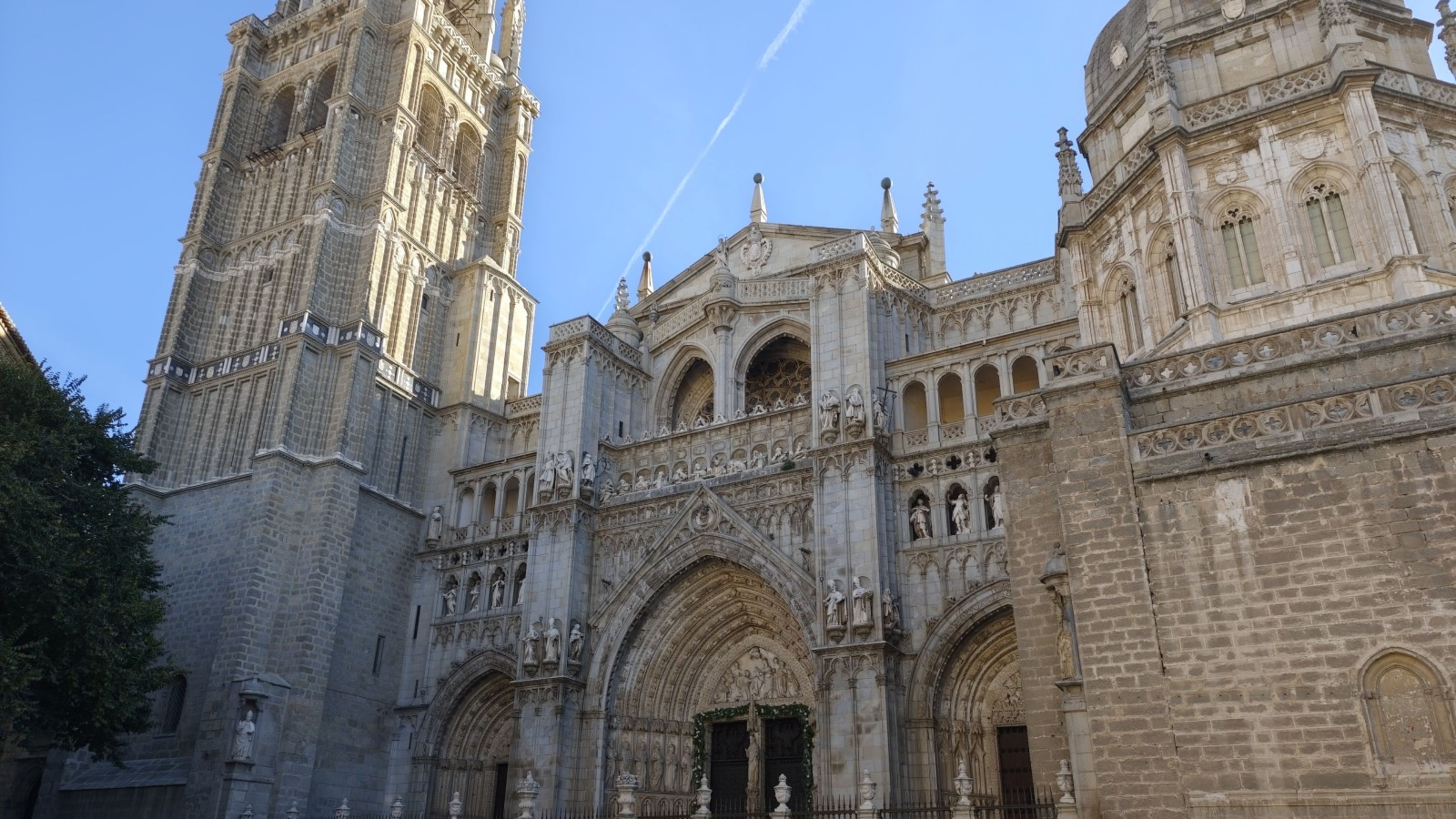
"Everything here is made for him — specifically so that by contemplating it, everyone may come to Jesus Christ and get to know him much better," explained the dean as he began the tour at the Chapel of the Descent.
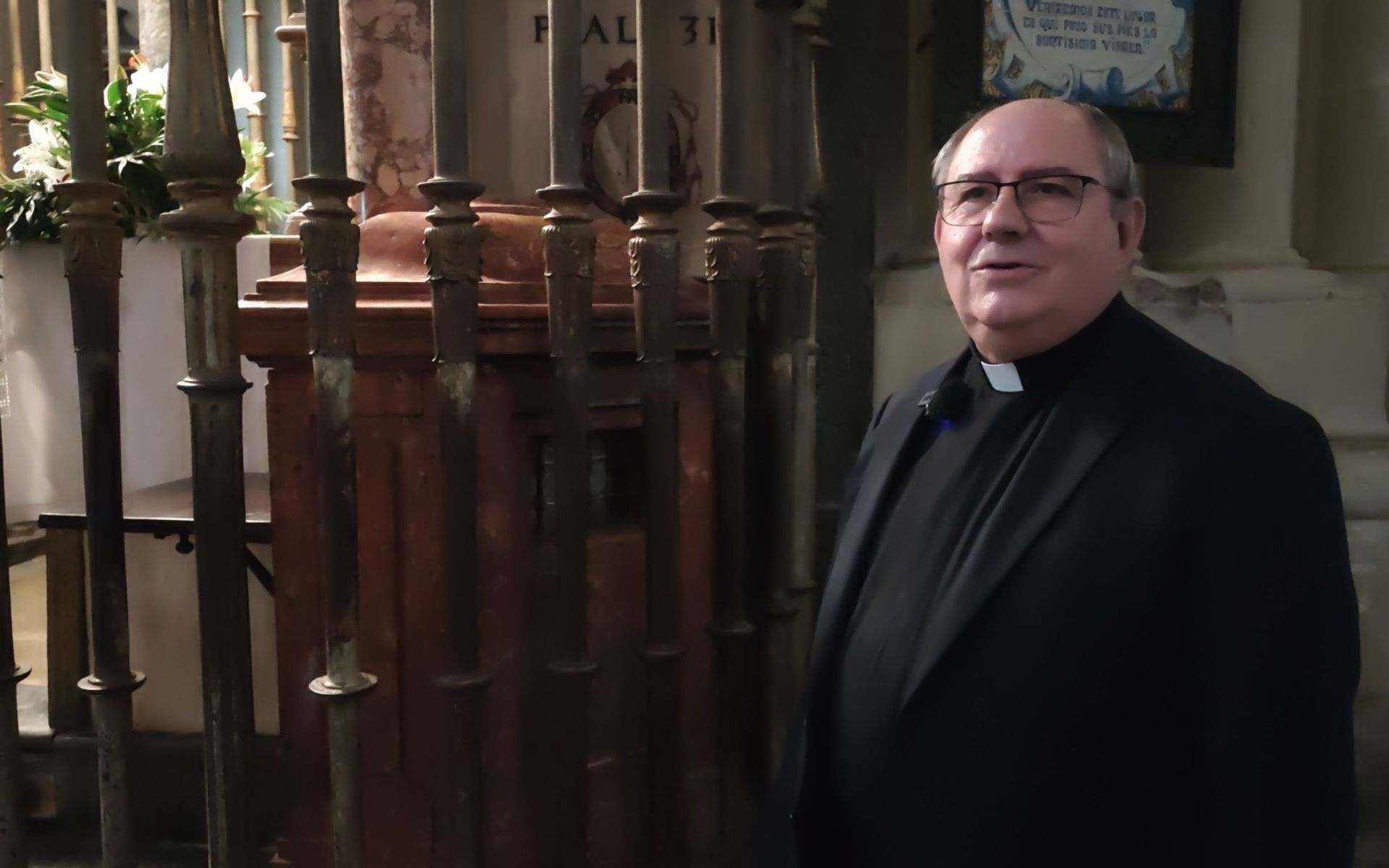
The site of this chapel is located where tradition places the high altar of the Visigothic church dedicated to the Blessed Virgin Mary, the first church on the present site of the cathedral, and where the people of Toledo come to touch the stone associated with a remarkable event according to tradition: "The Virgin Mary descended from the heavens to bestow a chasuble upon St. Ildefonso, in recognition of his fervent defense of Mary's virginity," the dean explained.
After admiring the small original chapel, the tour continued along the left aisle of the central nave to admire the monstrance crafted by Enrique de Arfe (Custodia de Arfe), built from the one used by the Servant of God Queen Isabella (1451–1504) for her private devotion. "When she died, it was Cardinal [Francisco Jiménez de] Cisneros [1436–1517] who purchased it from Queen Isabella's estate for the cathedral" and ordered it to be made of new pieces that highlight the human and divine nature of Jesus Christ.
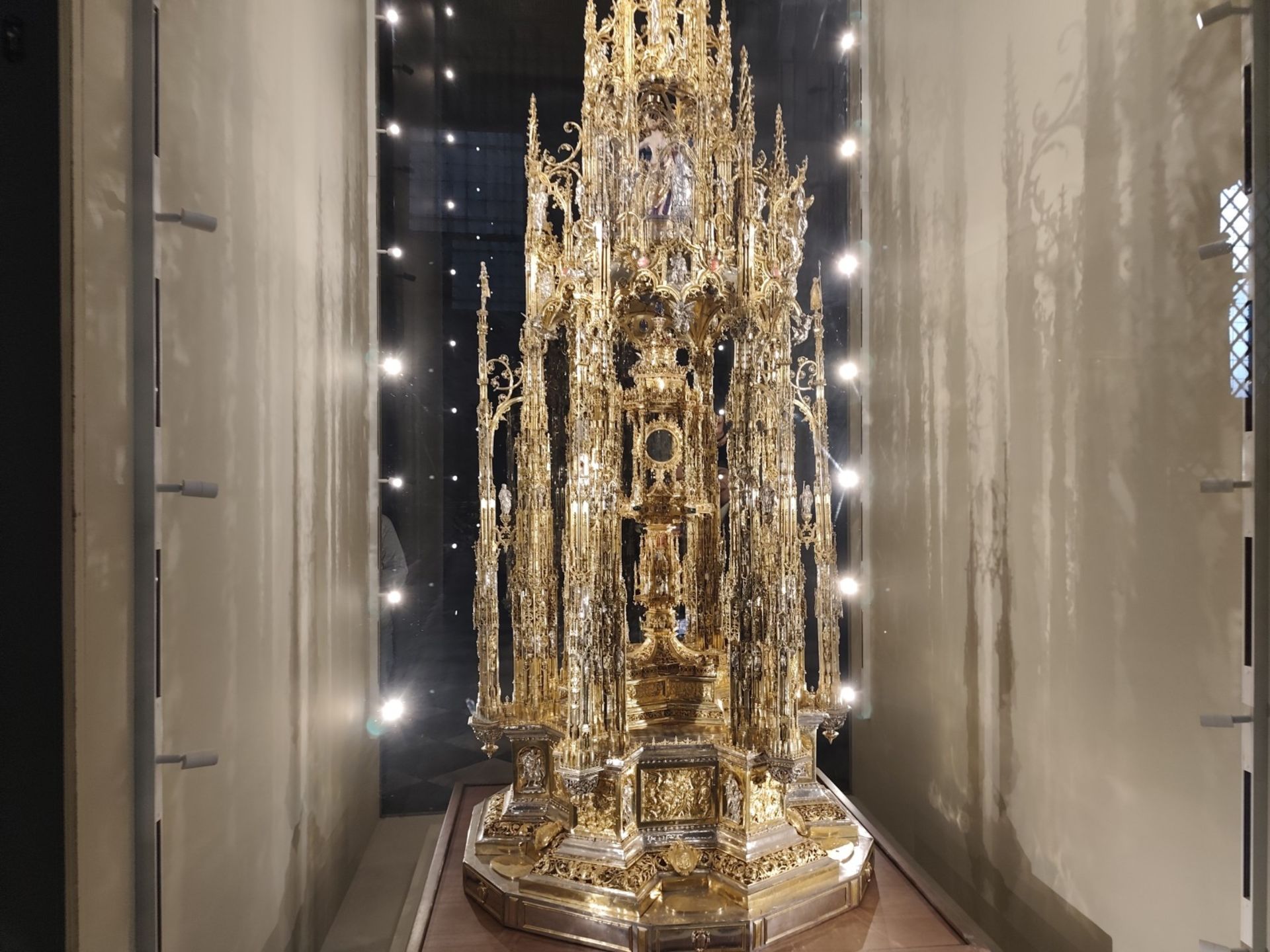
"Above is the Holy Spirit beneath the cross. Then there is a child holding an orb, [as if] saying: God is man, Jesus is man, and he is here. And further down, there is a magnificent figure of the risen Christ, which declares: He is God. Jesus is not only man; he is also God," the priest explained.
The third area the dean highlighted is the main chapel. Its layout is credited to Cisneros and it serves as the liturgical heart of the church. Sánchez drew attention to the imposing gilded and polychromed Baroque altarpiece, specifically noting the central placement of the tabernacle, which was moved there from a side chapel.
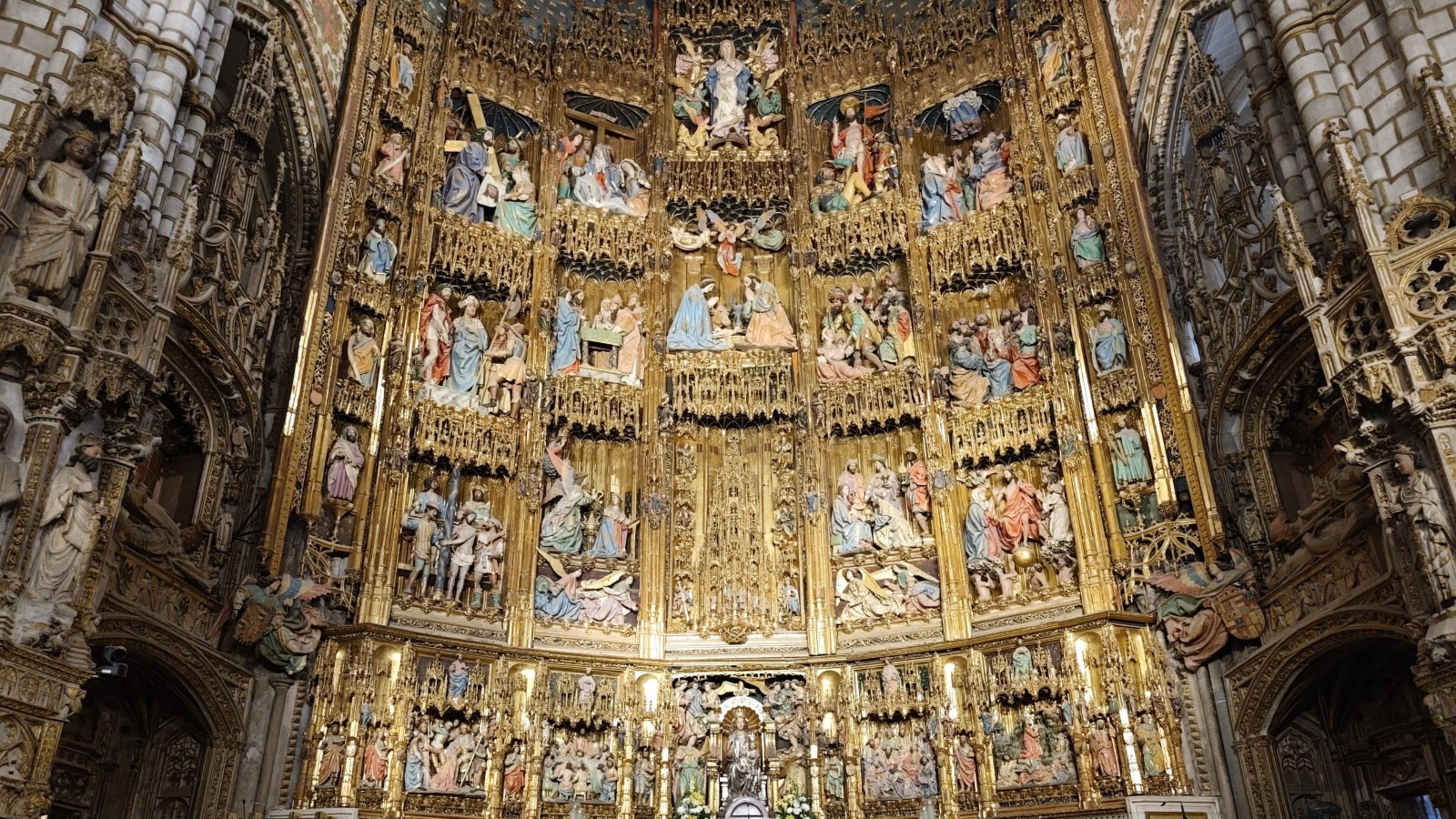
This tabernacle is also at the origin of the "Transparente," another expression of devotion to the Eucharist within the cathedral, which, in the view of the dean, represents an architectural "bold stroke" in the service of the liturgy; it involves an opening made in the vault above to allow light to stream down toward the tabernacle, creating "an explosion of joy directed toward the Eucharist."
At this point, the dean took the tour back to the center of the cathedral, where the choir is located. Upon passing through the gate, an image of the "White Virgin" holding the child Jesus in her arms greets the visitor.
"It is the most beautiful Gothic-era Virgin I have ever beheld. Observe the tenderness, the motherhood of Mary, her smile, and the pleasure she takes in having her chin caressed by her Son, as well as the way she holds him close to her breast. They express to each other mutual delight, joy, tenderness, and her motherhood that is truly worth contemplating," Sánchez remarked.
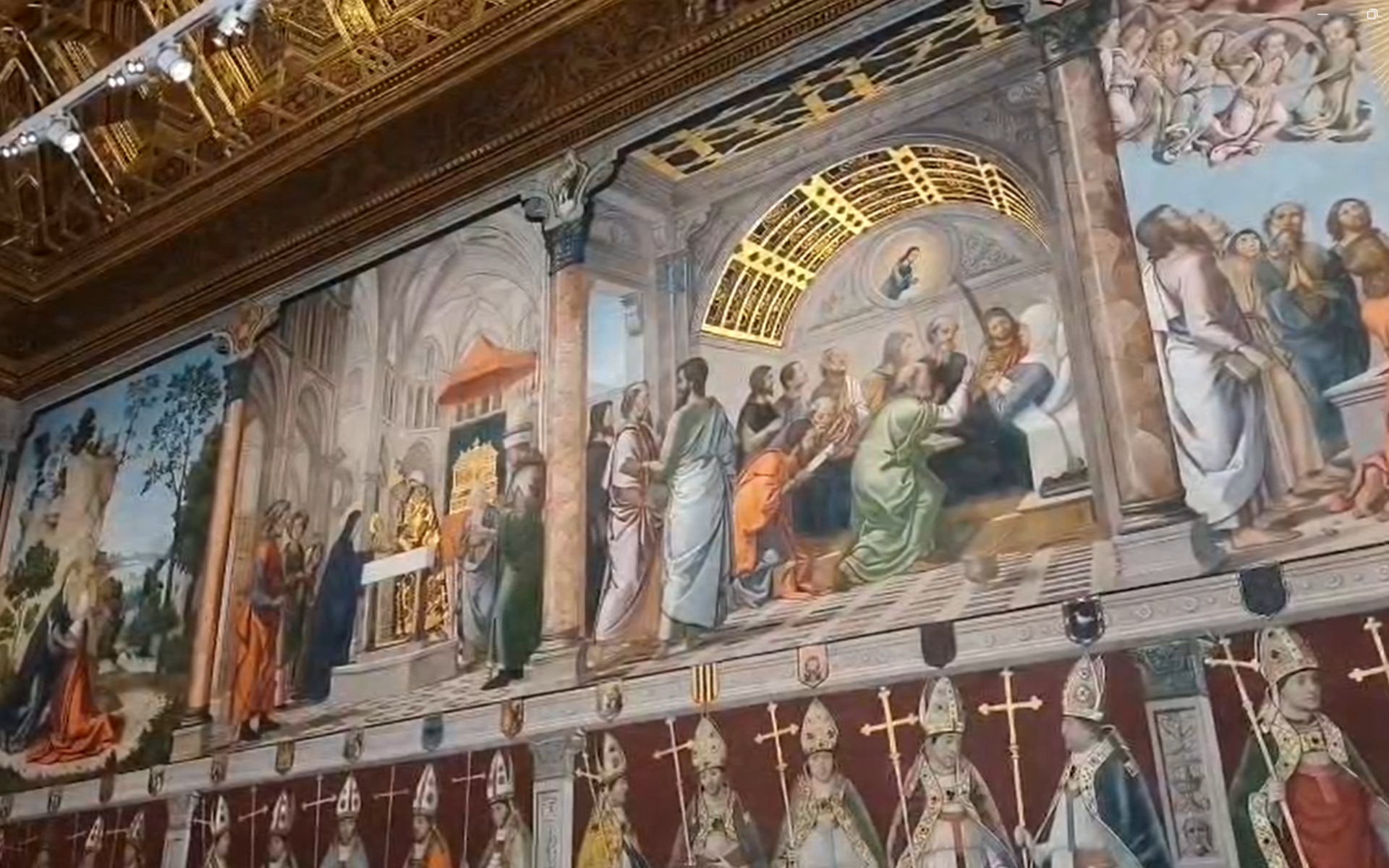
The dean next takes the tour to the chapter house, the upper reaches of which are adorned with numerous motifs alluding to the Virgin Mary, while, just below, one can see portraits of all the bishops of the primatial see of Spain, from St. Eugenius to Braulio Rodríguez, the archbishop emeritus of Toledo.
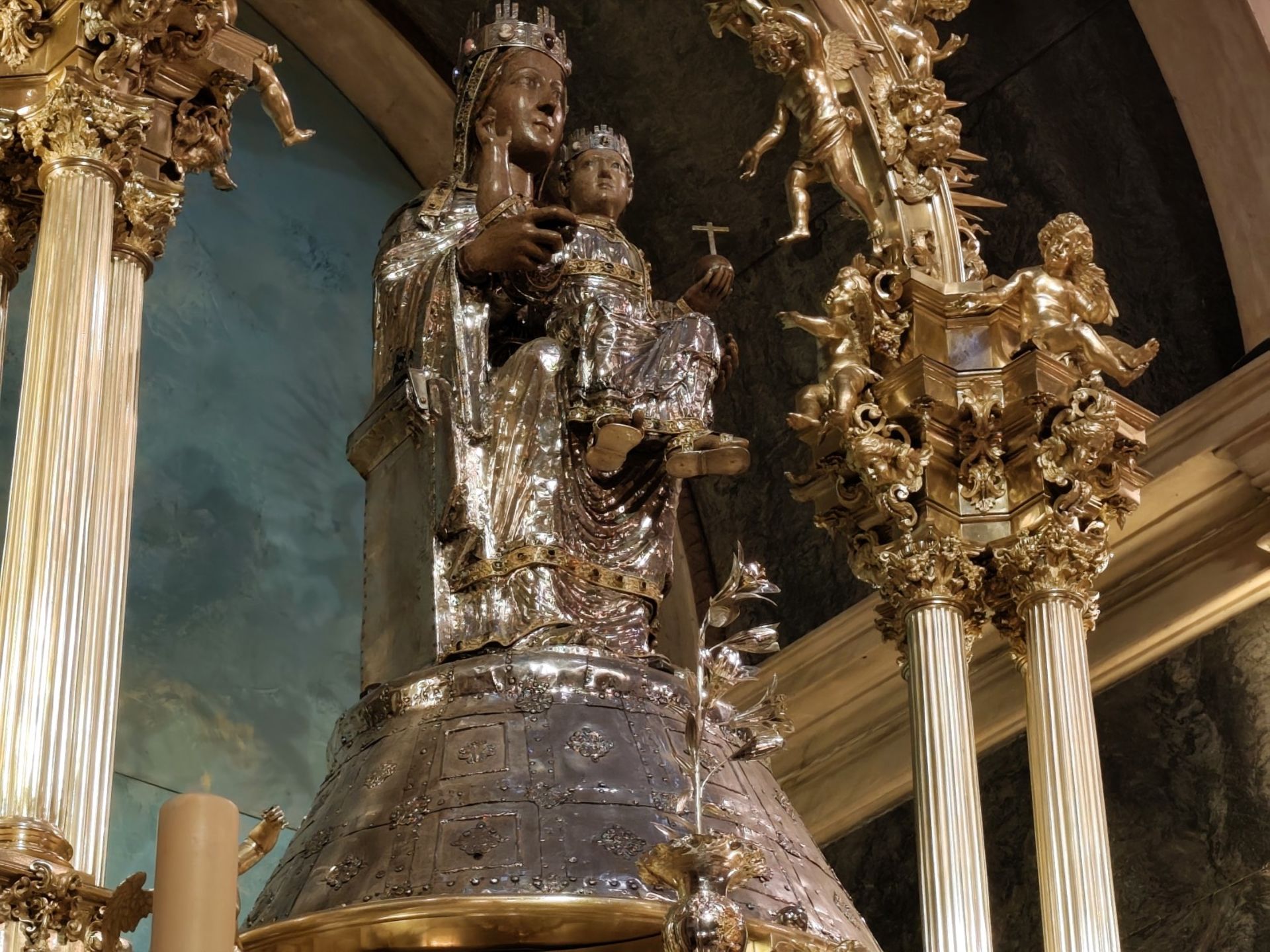
The tour concludes at the Chapel of the Rosary, where a jubilee Mass is celebrated daily under the patronage of the patroness of Toledo who last year received a silver lily (a papal distinction) to commemorate the centenary of her canonical coronation.
This story was first published by EWTN News Español, the Spanish-language sister service of EWTN News. It has been translated and adapted by EWTN News English.
The pontiff met with President Javier Milei on his first day in the country.
BUENOS AIRES, Argentina — Pope Leo XIV spoke about crime, economic inequality, and political polarization, among other topics, in a wide-ranging speech to President Javier Milei and other dignitaries Nov. 8, the pope's first day in Argentina.
Milei is a self-described "anarcho-capitalist" whose policies of austerity have drawn criticism from Argentina's Catholic bishops. Though Leo did not directly criticize the president, his speech was the most political he has given so far on his tour of South America, which began Nov. 6 in Uruguay and will conclude Nov. 16 in Peru.
The pope opened by stating that he had come to Argentina "as a pastor," but that the Church wishes "to propose to those who hold public office a message inspired by the Gospel and aimed at safeguarding the dignity of every person, civic concord, and the common good."
Leo highlighted several widespread social problems, including public safety. "Organized crime, human trafficking networks, arms and drug trafficking together with corruption all undermine social cohesion, fuel violence and divert resources necessary for the common good," the pope said.
Violent crime is an urgent concern across the region. According to a U.N. report, the homicide rate for Latin America and the Caribbean was the world's highest in 2023, and nearly four times the world average.
Addressing the question of inequality, the pope said that efforts should be made to ensure "that economic growth also benefits those who are disadvantaged. Here I think of families facing an uncertain future, the unemployed, the elderly who for years contributed to society, and all those who, despite hard work, nonetheless struggle to meet their household's needs."
Leo pointed to the plight of young people driven to emigrate in search of opportunities. "A nation must seriously ask itself where it has failed when its young people have to leave their homeland in order to make their dreams come true," he said.
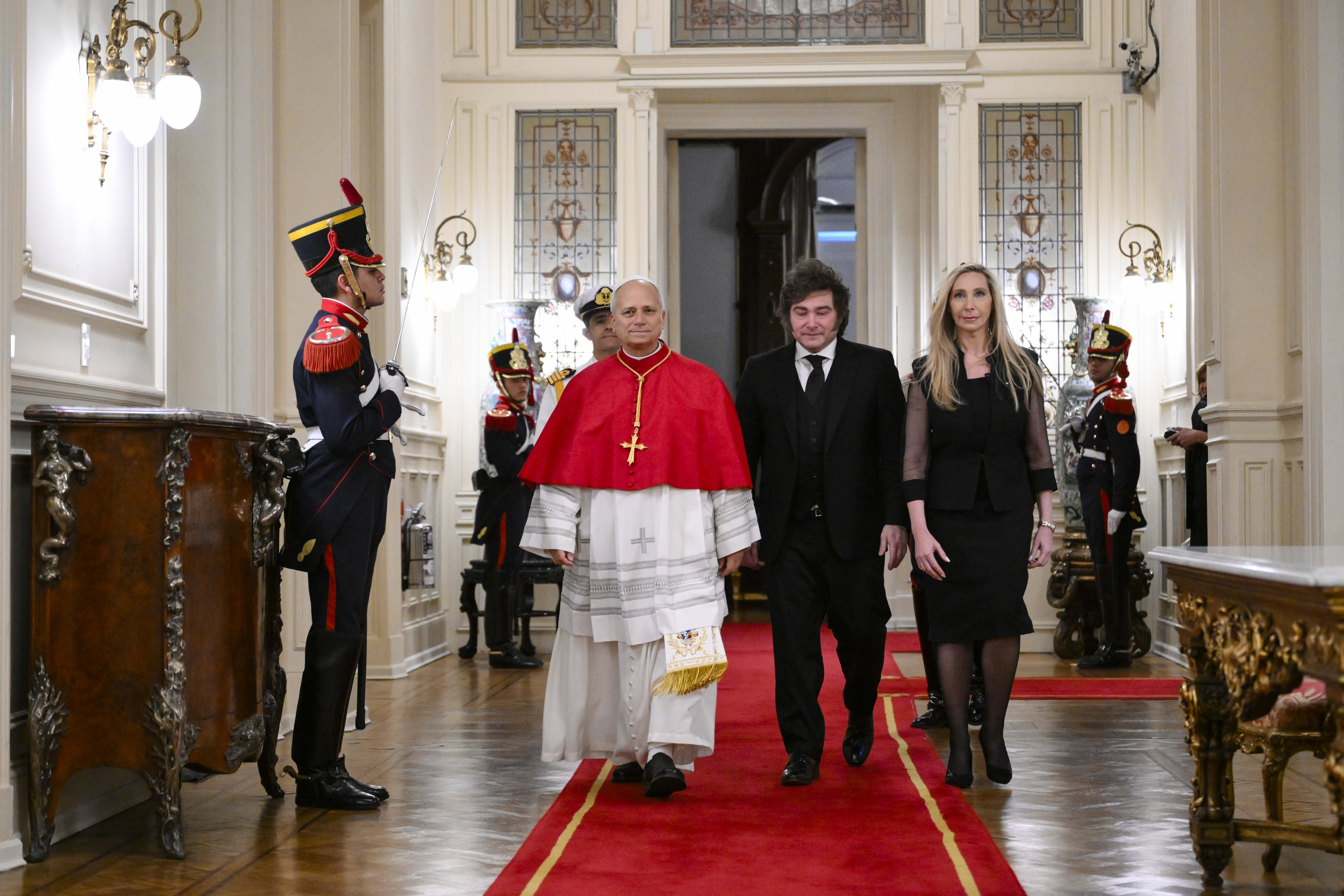
He also addressed what he described as a threat to democracy from political polarization, a widely noted trend in Latin America and beyond.
The pope said democracy is strengthened "through willingness to listen, through careful use of words, through the patient search for agreement, and through the ability to see those who think differently as fellow citizens with whom we share a common future. In this way, a spirit of trust is created, one that enables a society to deal with its differences without losing sight of the things that keep it united," Leo said.
Milei campaigned for president as a firebrand, wielding a chainsaw to show what he would do to government budgets and deriding his fellow Argentine Pope Francis as, among other things, a "filthy leftist," though he later said he apologized personally to Francis. On Sunday, speaking right before the current pope, the president lauded the late pontiff as "an exceptional figure who inspired us all with his humanity, regardless of our creed. A person of immense generosity, whom I had the honor of knowing personally."
Leo opened his own speech by recalling his predecessor, saying the universal Church had "listened to the voice of an Argentinian pope" for years. The pope also urged the country's leaders to make room for the unborn.
The audience of foreign diplomats and Argentine civil and political leaders frequently interrupted Leo's speech with vigorous applause and cheering reminiscent of a parliament or a political convention.
Earlier on Sunday, Milei met Leo's plane at the airport and met with him privately at the seat of government, the Casa Rosada, before he and the pope gave their speeches.
Architects say Christchurch's new Cathedral of the Blessed Sacrament, the first Catholic cathedral built in New Zealand in more than 120 years, is designed to serve for the next 200 years.
The architects of Christchurch's new cathedral have revealed new details about the building that they will last for generations
Warren and Mahoney, the Christchurch firm responsible for the master plan, architecture and landscape design, has released new details of New Zealand's first new Catholic cathedral in more than 120 years.
"Some projects carry a different responsibility. They ask us to think beyond our own lifetime and consider what stewardship looks like 50, 100, or even 200 years from now," said Joseph Hampton, the firm's principal and lead architect.
The church will have seating for 800 people and go up on Barbadoes Street, a mere 20 meters (65 feet) from where its 1905 predecessor stood until it was demolished in 2020, nine years after the Canterbury earthquakes left it beyond repair.
The walls will be of local brick and stone, with glass-fiber reinforced concrete. The structure is designed to bend rather than break in a quake. To keep costs down, much of the building will be made off-site in building modules, which the firm said still allows "a sense of monumentality within a constrained budget."
While the old cathedral faced the street, the new edifice will face north, toward a planned Catholic campus. Behind it will be a perpetual adoration chapel, which Bishop Michael Gielen said will be open day and night, along with the Te Rangimarie community center.
The diocese unveiled the design in July and appealed to Catholics to help pay for it. The project will cost 80 million New Zealand dollars (about $46 million). Insurance proceeds and asset sales cover 45 million New Zealand dollars.
Construction can start once the total reaches 72 million New Zealand dollars.
To save money, the diocese will put electronic bells in the two towers instead of real ones, saving about 7 million New Zealand dollars. Students from Catholic schools will design the side windows until the diocese can afford stained glass.
Gielen told "EWTN News Nightly" in September that the rebuild is "a metaphor."
"It's not only the cathedral we're rebuilding. We lost 30 or 35 of our churches — damaged or demolished — in the last 15 years," he said.
Hampton said the cathedral is meant to reach beyond its walls.
"It is a home for the Catholic community, but it is also part of Christchurch," he said.
The pontiff celebrated Mass at Uruguay's principal Marian shrine.
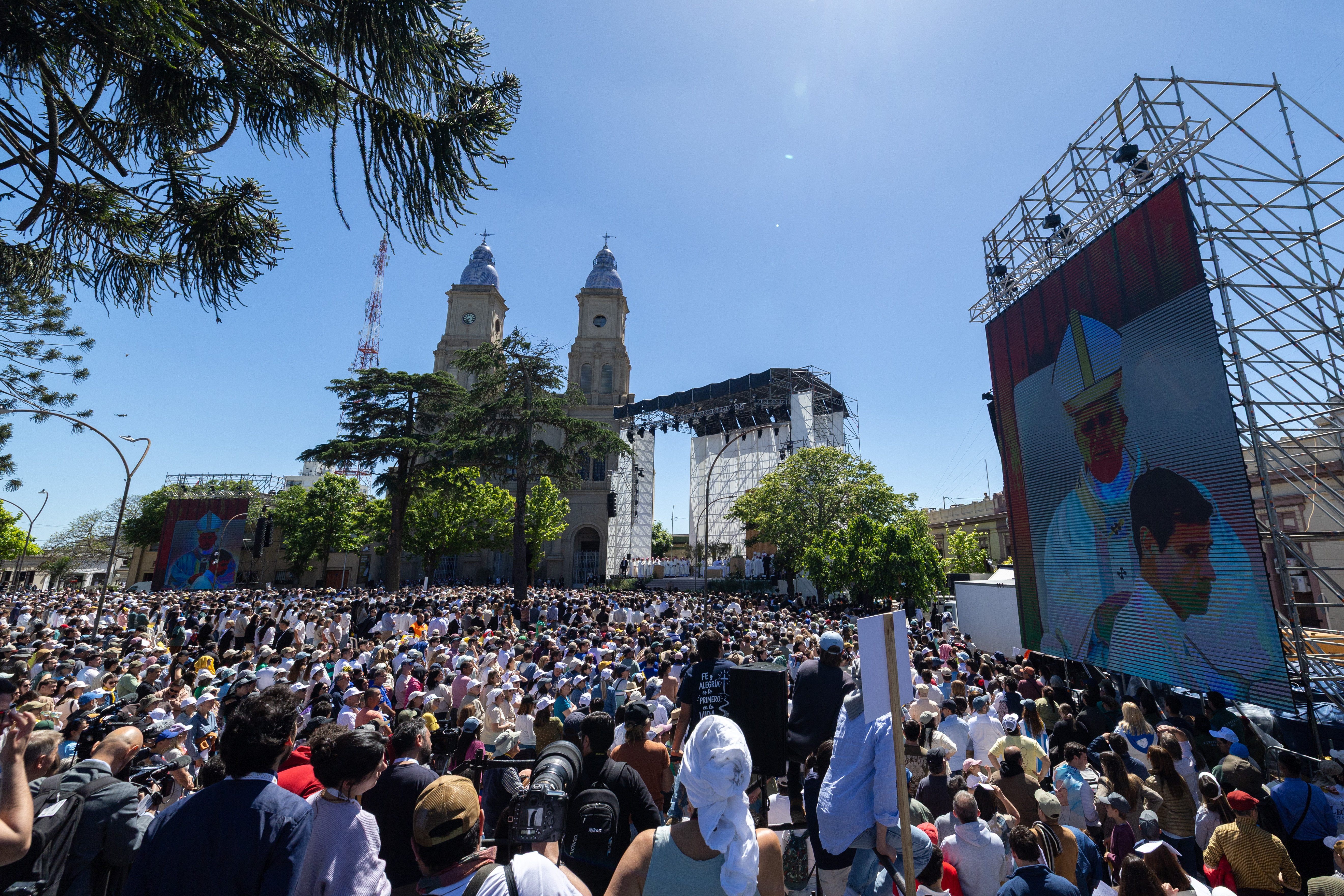
FLORIDA, Uruguay — Pope Leo XIV celebrated Mass at Uruguay's most prominent Marian shrine on Sunday, where he paid tribute to women's role in transmitting the Catholic faith and urged them to continue doing so despite secular trends.
"Mothers and grandmothers: never tire of passing on the faith!" Leo told a congregation in the square outside the cathedral of Florida, a city in south-central Uruguay. "Even if your loved ones seem far from God, continue to place them before him. Do not stop blessing them, accompanying them, and simply reminding them of what they once received."
Uruguay is one of Latin America's most secular countries, where the majority of people are not affiliated with any organized religion and 28% identity as atheist or agnostic.
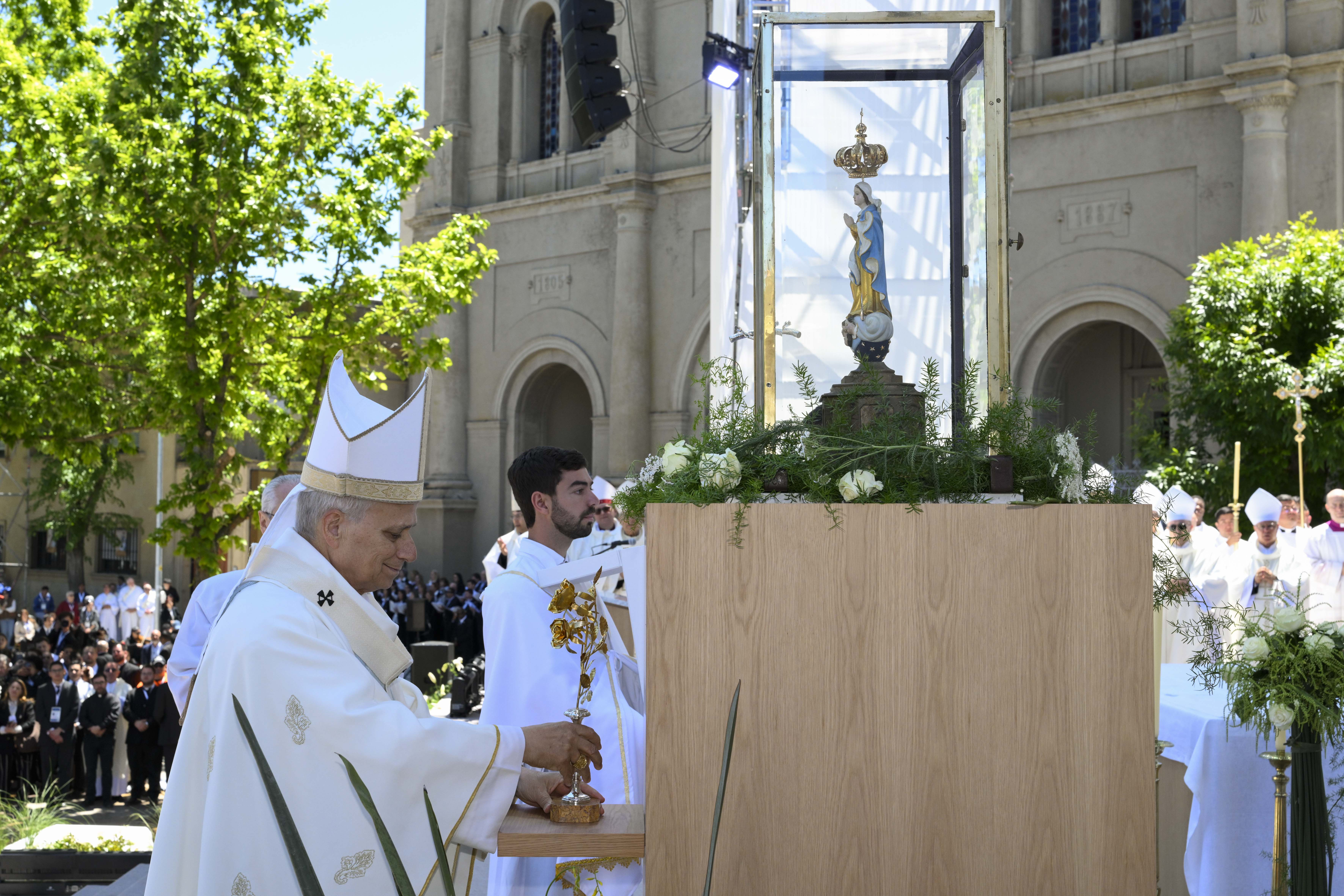
The cathedral in Florida houses the Virgin of Thirty-Three, a small wooden sculpture of Mary named for the number of early 19th-century patriots who entrusted their efforts for Uruguay's independence to her intercession.
Leo noted the history to underscore, as he has done throughout his visit, that Catholicism has deep roots in the country.
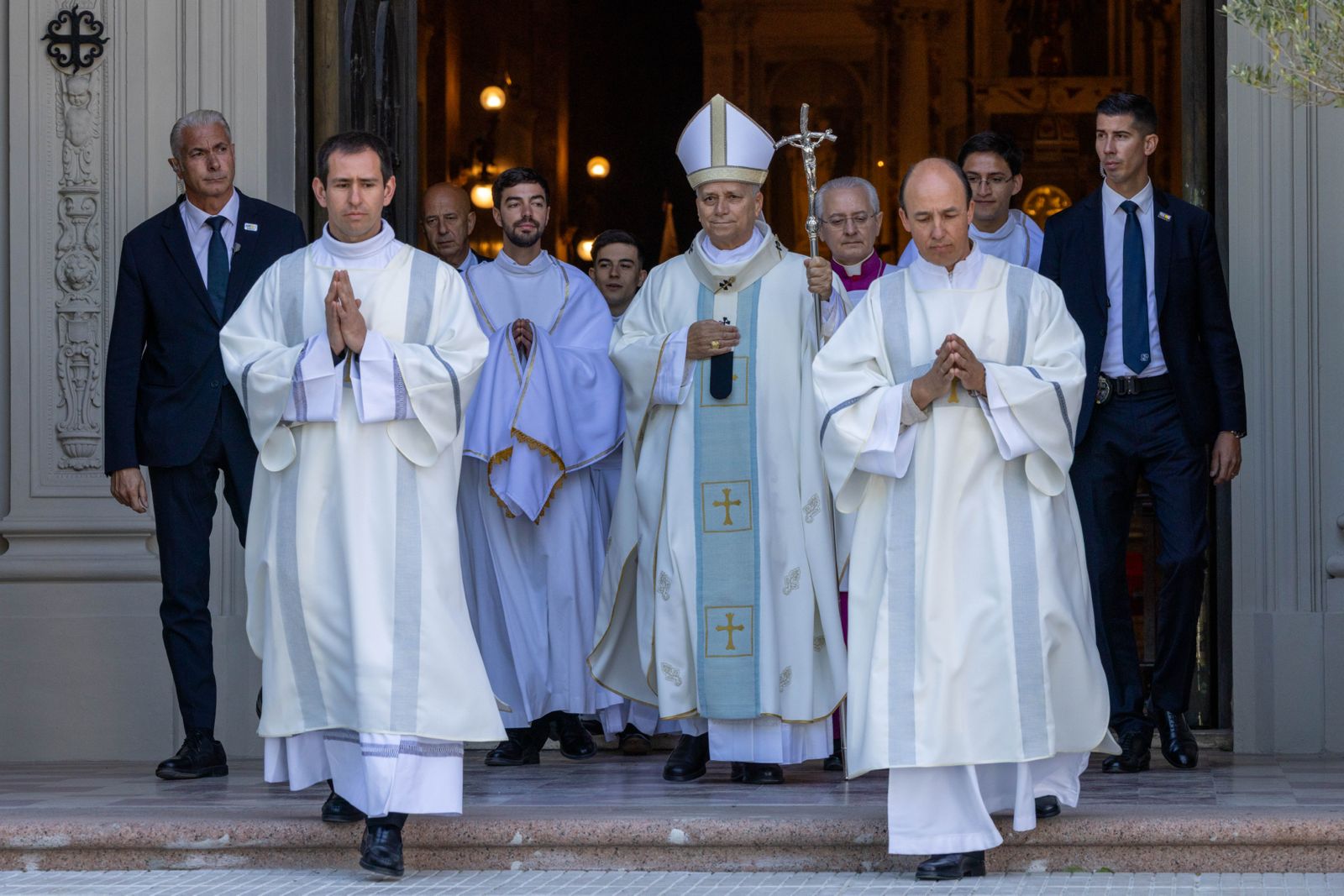
The patriots' "gesture reminds us that the history of peoples, too, cannot be fully understood without reference to God. Thus, from the earliest days of the nation's founding, Uruguay has been intimately linked to a Mother," the pope said.
He linked the figure of Mary to the tradition of mothers and grandmothers teaching children how to pray and "live out Christian charity."
Thanking such women for their efforts, the pope commiserated with them over a widespread decline in religious practice.
"I know that many of you carry a very specific sorrow. You taught your children to pray, and today they no longer do so. You used to attend Mass together, and it has been years since they entered a church. You spoke to your grandchildren about God, and now you do not know if those words left a mark. Sometimes you wonder if you did something wrong or if it was all futile," Leo said.
He encouraged them with the example of St. Monica, mother of St. Augustine, the inspiration for Leo's religious order, who never despaired of her son's eventual conversion and sanctity.
The pope also urged fathers and grandfathers to foster faith in the young. "Children learn a great deal by seeing that their father can kneel before God without feeling that he is any less of a man doing it," he said.
Leo concluded by urging all Uruguayan Catholics to evangelize in their daily lives.
"You must enter people's homes once more, draw near to them, listen to their questions and bring them to Christ! Each of you knows a person toward whom you need to take that step: perhaps a child, a friend, a neighbor, someone who stopped believing long ago or who has never had anyone close to them to speak to them about God," the pope said.
At the end of the Mass, Leo placed a golden rose before the image of the Virgin, a traditional papal devotion. But his homily contained a note of caution about veneration of Mary, recalling the Vatican's decision last year to reject the title of "co-redemptrix" for her as potentially confusing.
There is "one mediator between God and humankind, Christ Jesus," the pope said, quoting St. Paul. The he added: "All of Mary's greatness is based on her relationship with Christ: she welcomes him, lives by him, and leads others to him. An encounter with the Master is the goal of all evangelization and of all authentic Marian devotion."
Instagram post< async defer src="//www.instagram.com/embed.js">
Silvia, from Uruguay, shared her excitement about serving as a Eucharistic minister at the Mass.
"It truly is a beautiful moment, very, very moving. I'm eager to help people and to be part of this celebration, which belongs to all of us. It is also a privilege to be able to distribute the Eucharist," she said.
She said being from the city hosting the Holy Father is "a tremendous gift from God," especially on the feast day of its patroness, Our Lady of the Thirty-Three, celebrated on Nov. 8.
Reflecting on the three days the Holy Father has spent in her country, she recalled the pope's homily during Mass in Paysandú, in which he encouraged the faithful to be bridges, build communities, and accompany others.
"I think it is a challenge and an invitation that we need in Uruguay," she said.
Later in the afternoon, the pope is scheduled to depart for Argentina, where he is set to visit the Monument to General San Martín and meet with President Javier Milei.
Leo XIV will celebrate Mass in Uruguay Sunday and, later in the afternoon, depart for Argentina, where he will visit the Monument to General San Martín and meet with President Javier Milei.
Bishop Mark Kadima Wamukoya reminded Christians to follow Christ's example to pray for everyone, even those who "hurt and betray."
BUNGOMA, Kenya — Bishop Mark Kadima Wamukoya of Kenya's Diocese of Bungoma has urged Christians to pray for those who hurt or mistreat them and to set aside their differences when gathering for worship.
In his homily during the consecration of St. Mark's Ojamii Catholic Parish church on Nov. 5, Kadima reflected on Jesus Christ's institution of the Eucharist amid betrayal.
"Jesus Christ instituted the Eucharist at the time he was betrayed. Despite the pain, suffering, and betrayal, he gave us a lasting blessing," he said.
The Kenyan bishop called on Christians to follow this example in their relationships with others.
"This teaches us that even when someone wrongs us, we should still bless them. Even when we are hurt or mistreated, we should come to church, pray, and ask God to bless others," he said. "This is a place where we should leave our differences behind and say, 'May everyone be blessed.'"
Kadima emphasized the importance of the church as a place for prayer and the celebration of the sacraments, particularly the Eucharist. He encouraged the faithful to participate in worship despite difficulties in their personal and family lives.
"Coming to church does not mean that everything in our lives is perfect. Our families, marriages, and children may be facing challenges, but we still come to church to pray and ask God to bless everyone," he said.
Turning to promises made before God, Kadima urged Christians to take their commitments seriously, including those made at priestly ordination and in the sacrament of matrimony.
"The Church is a place where we come to make promises and honor them," he said. "When we say yes at the altar, that yes must mean something."
Recalling his own ordination, the bishop said: "Even my own priestly ordination involved being brought before the altar, where I was instructed to lie down. Once you make a commitment, you must be ready to fulfill it."
He added: "We need the Church because we are a people of promises. Our lives as God's people cannot be built without promises and their fulfillment. When we say, 'I accept' or 'I promise,' we must mean it."
Kadima also called on Catholics to respect rules and regulations in their daily lives.
"As Catholics, including myself, we are called to be people who respect and obey the law. The Church reminds us that we must live according to rules and regulations," he said. Kadima linked this responsibility to service, good conduct, and respectful communication.
"When we come to church, we are reminded to become people of service and good conduct. We must cultivate a culture of obedience and respect for rules, whether in the Church, at the table, at the altar, or in the way we communicate with one another," he said.
This story was first published by ACI Africa, the sister service of EWTN News in Africa, and has been adapted by EWTN News.